Tuesday, December 4, 2012

2012: The Best New Artists...


I’m still buzzing how my break-out artist last year, Grimes has blown up exactly how I predicted. As year-end lists pile on with her and Frank Ocean (he, too was on my list), it’s time to look forward to the next batch of promising new musicians. As with last year, these artists aren’t all new but this was the year that made you not forget about their impact on the years to come:


First, my pick as the top new artist of the year (drum roll..)

Azealia Banks:

exactly one year ago, the first set of views on Youtube for a song called 212 started to spread word of a new American female hip/hop artist called Azealia Banks. It wasn’t expected to do anything other than merely introduce the world to her but here we are—two releases later and she’s still the most talked-about female artist out there yet to put out a debut-proper. That’s not hype, that’s talent being waited to be consumed by the masses. February 2013 is the new release date for Bank’s debut and it’ll be interesting to see how much she’s learned from an incredible year and move on from there.


and the rest (in no particular order)...


Kendrick Lamar:

not technically a new artist but the flawless Good Kid, M.A.A.D City was his first LP for a major label. Given all the plaudits it’s gotten this year I need not say anymore…after all I’m sure you’ve heard it by now.


THEESatisfaction:

after apparently wowing the SXSW festival this year, many then believed the duo, Stasia Irons and Catherine Harris-White to be the real deal. I already knew it after listening to their great debut this year and, lest one forget, they played a huge part in last year’s Shabazz Palaces LP. Pretty high praise indeed.


Five Steez & Nomad Carlos:


the Jamaican hip/hop scene has been rumbling of late with new sounds and artists no longer content to be merely underground. And we’re all just catching on. It’s a cadre of dedicated artists and Five Steez & Nomad Carlos are spearheading this revolution but there’s an entire community helping out with producing their craft. It’ll be an exciting 2013 to see how much more these guys have stored up with their conscious lyrics and lush production flow.


Angel Haze:

while it’s hard to initially look beyond her striking styling to Aaliyah, that’s where the similarities end. Haze is more in line with Azealia Banks who, not surprisingly, she’s working on a collaboration LP. I for one can’t wait to hear that foul-mouthed delight.


Mac Demarco:

imagine a combination of Beck and Jack White and that’s basically what type of brilliance Demarco unfurled on his stunning pair of debuts this year. And he’s punkish-looking, irrepressibly horny and wants to write Bradford Cox-like songs afterwards. This kid is all the excitement of youthful energy. He doesn’t look like much but take a listen to Freaking Out The Neighbourhood and get converted.


Brittany Howard (of Alabama Shakes):

without doubt, the strongest vocals to capture critics this year was Brittany Howard, the lead singer for blues/soul band Alabama Shakes. Howard has been touring incessantly with her band the past year and everyone has been stunned by that commanding voice that beats all the current soul singers by a huge margin while being called the black Janis Joplin.


Ava Luna:

an exciting 6-member group that twists and chews out pop/rock/electronic tracks like the rent is overdue. Carlos Hernandez is the lead vocal but he is backed admirably by Ethan Bassford, Julian Fader, Felicia Douglass, Nathan Thompkins and Becca Kauffman. It’s a wide assortment, a little United Nation of musical ideas that works well.


Alt-J:

with this year’s Mercury Prize theirs, this British band is now firmly on its way but what’s so pleasantly surprising is the cool, steady hand that is their debut. Formed in 2007, Alt-J is Joe Newman, Thom Green, Gus Unger-Hamilton & Gwil Sainsbury and one can tell these guys overdosed on Radiohead’s Kid A when it came out.


Django Django:

the exciting new music coming out of England of late isn’t only with solo artists as this group (Dave Maclean, Vincent Neff, Tommy Grace, Jimmy Dixon) have put out a terrific debut album while distinguishing themselves from everyone else. They’ve been in the spotlight since 2009 but it was only this year that everything came together. This is the type of intelligent yet smart pop/rock music that, quite frankly, most American bands are struggling to produce.


Chet Faker:

the soulful Aussie hasn’t become a household name in North America yet but Down Under he’s made an incredible start by winning two prizes at that country’s Independent Music Awards. Faker, real name Nick Murphy, rose to prominence by covering Blackstreet’s hit No Diggety but his debut EP proved that it was no mere fluke. The ease in which he vocally navigates these beats makes for an exciting listen and I can’t wait to hear what soul goodies he’s planning next.


Lana del Rey:

love her or hate her but Lana del Rey’s stunning EP earlier this year found a niche that is only now imploring upon listeners globally. She’s seriously flawed as a concept artist but that’s the fun in watching her assemble the damaged parts and drown them in deep analysis.


Beth Jean Houghton:

the British lass with the quirky hairdos but, more importantly, the deep, mature folk voice. Mark my words: she’ll go solo and wow us with her next opus.


Kimbra:

imagine my surprise to learn that the star of a song the world has latched onto—Somebody That I Used To Know—was a male singer called Gotye and not the obvious star Kimbra. Though her debut Vows was released in her native New Zealand in 2011, it only reached North America this year. With her jazzy textures and sensual voice, this lass is the real deal.

Monday, December 3, 2012

2012: The Top 10 Most Disappointing Albums...


Of all the year-end lists that I do, this is the one that I look forward to the least. One invests a lot of time into an artist’s growth and at times one can see the promise land even before they do. Most of the artists here have tasted glory before but have fallen or some just stand on the cusp but somehow haven’t made it yet. Here’s to hoping they get back on track:


1. Santigold Master of My Make-believe:

apparently recorded in writer’s block as well as frustration with the vapid state of pop, White returns after simmering in Jamaica but this cannot compare with her stellar debut 4 years ago. The disposable pop/ska never quite lifts off and though Disparate Youth is stunning, her sense of America chic slips too often. (METACRITIC SCORE: 7.4/10)


2. Pop Levi Medicine:

the most exciting new pop artist from 2007 returned under the radar this year. Medicine is indeed a huge disappointment as these songs rattle off without the same funky genius that animated 2007’s best song Sugar Assault Me Now. Is there hope for him to return with the good stuff? Time will tell but I sure hope so. (METACRITIC SCORE: 5/10)


3. Yeasayer Fragrant World:

when I discovered Yeasayer in 2008, I thought wow: here’s a band that’s going to merge pop and rock in ways never seen before. Their debut, All Hour Cymbals was my 6th best album of the year and their masterpiece song, Wait for the Summer was branded as my best song of 2008. Two years after that, a few jitters appeared with Odd Blood but here now comes the weird-sounding Fragrant World, with its shapeless cover art and music. I’m left to wonder what exactly went wrong here but still searching for answers. (METACRITIC SCORE: 7.1/10)


4. Ani DiFranco Which Side are you On?:

any feminist artist out there now knows they owe a huge debt to DiFranco, who championed indie music long before it was cool to do so. Four years ago, she gave us the radical Red Letter Day, one last great “fuck you all” shout but now, as a mother and seemingly very content in her life, the rebel seems a distant past. (METACRITIC SCORE: 6.9/10)


5. Andrew Bird Break It Yourself:

few artists inspire the type of technical awe Andrew Bird does but for all his genius ability to play and co-ordinate intricate instruments, his lyrics have stopped blowing the roof off. (METACRITIC SCORE: 8/10)


6. Japandroids Celebration Rock:

the duo’s debut, Post-Nothing was my 4th best album of 2009 and after waiting three years for the follow-up, you can imagine how glad I was to hear the familiar noise and structure framing their songs. The beauty of the noise though isn’t as sharp as was before, nor the songs as memorable. I hate to be a party pooper but for the life of me I can’t see why The House That Heaven Built is being crowned song of the year by virtually every critic. (METACRITIC SCORE: 8.3/10)


7. The Tallest Man On Earth There’s No Leaving Now:

Kristian Matsson may never escape the Bob Dylan voice comparison but, as I’ve stated before, there are worse things to worry about in popular music. This is yet another accomplished LP but the invisible ceiling keeping him in check hasn’t been shattered with it. We’re patient though Kristian, so take your time.. (METACRITIC SCORE: 7.2/10)


8. Sharon van Etten Tramp:

it took me a while to warm up to van Etten but after 2010’s brilliant Epic (my pick as 11th best LP of the year), she returns with Tramp, a little too-quiet force that sees her maturing more and more into the singer-songwriter we’ve known possible but still holding back from all out bliss. Some nice moments but one suspects there’s much more left in her tank. (METACRITIC SCORE: 8.1/10)


9. The Noisettes Contact:

lead singer Shingai Shoniwa was hailed by me as one of the break-out voices of 2009 and even three years later it’s easy to see why. Contact holds up at points because her vocals still know its way around grooves but the band hasn’t taken a leap here—more like remain stuck in mid-range songs. I said it before and I’ll say it again: it’s time for Shoniwa to embark upon a solo career. (METACRITIC SCORE: 7.7/10)


10. Xiu Xiu Always:

a bit lost since their last album, Xiu Xiu returns with Jaime Stewart still rummaging through the unhappy past life we’ve been co-mingling with since the band’s debut. Yet, if Dear God, I Hate Myself had points of convergence then Always merely just attempts to rekindle something interminably lost. With the exception of the fascinating Smear the Queen, it’s difficult to see purpose and healing within all this wailing and flailing around. (METACRITIC SCORE: 7.8/10)

Sunday, December 2, 2012

2012: The Top 10 Worst Films (that I saw)


Bad films are a part of our lives—its best to just acknowledge that and move on. This list is far from concrete because like any self-respecting critic, I do not watch bad films on purpose. So, after I reached a certain quota then I stopped watching. Surely there are worst films released subsequently but I never set eyes on them. Here’s the unfortunate viewing experiences of 2012:


1. The Dictator (directed by Larry Charles):

Sacha Baron Cohen’s search for satire in a post Borat world has been downright ridiculous and this is his ultimate worst attempt at relevance until, well, perhaps whatever he’s planning next. (METACRITIC SCORE: 5.8/10)


2. Snow White & The Huntsman (directed by Rupert Sanders):

the film’s body politic surrounding the queen and Snow White remains strange even up to its dull conclusion. The director, Rupert Sanders (in his debut) is not concerned with transcendence but more so that you get the generic point of how life-sapping the queen is…as if somehow you’re in danger of ever forgetting it. Snow White and the Huntsman never looks back to see how Ravenna gets to be the monster that she becomes, just a brief glimpse on the effect of her own mother’s words and charms upon her.
(METACRITIC SCORE: 5.7/10)


3. Gone (directed by Heitor Dhalia):

where, once again, with incredibly cheesy writing, Amanda Seyfried is the undeniable weakest link in a film where she was the star. (METACRITIC SCORE: 3.6/10)


4. Silent Hill: Revelation 3D (directed by Michael J. Bassett):

even in 3D this is by far the worst attempt at horror this year. The premise is now worn out and with the cult defeated, please no more Alessa! (METACRITIC SCORE: 1.5/10)


5. Ted (directed by Seth McFarlane):

a massive hit and one I looked forward too but by the time Ted uttered the first words, I knew I’d end up hating it. What could have been a tale of co-dependency turns out into a corny, horny romp through adult life. Ugh, lets hope McFarlane doesn’t pull too many references of it at next year’s Oscars. (METACRITIC SCORE: 6.2/10)


6. Ghost Rider: Spirit of Vengeance (directed by Brian Taylor & Mark Neveldine):

it wouldn’t be an annual worst film list without Nicholas Cage… (METACRITIC SCORE: 3.2/10)


7. One For the Money (directed by Julie Anne Robinson):

Katherine Heigl plays a sorta cop tracking down a former lover whom she may very well be in love with still. The ensuing triteness is enough to make one weep from boredom. (METACRITIC SCORE: 2.2/10)


8. Dark Tide (directed by John Stockwell):

the trailer for Dark Tide is pretty good at deceiving one with what’s going on. One expects some gripping sea saga but what the trailer can’t hide is Halle Berry. Yet again, Berry has found herself in a schizophrenic film with choppy, cheap action and her own questionable acting doesn’t help much. The film, on another note, hasn’t even made half a million at the box office despite being made for $25 million. (METACRITIC SCORE: 2.3/10)


9. The Possession (directed by Ole Bornedal):

Sam Raimi has been involved with exceptionally cheesy and bad horror films for a while now so when I saw that he was the producer of this, expectations were low. The film, based on a real-life event, follows a family dealing to reclaim the soul of the daughter after she accidentally opens a dybbuk box. The spirit gets out, makes mischief and blah blah blah. (METACRITIC SCORE: 4.5/10)


10. Alex Cross (directed by Rob Cohen):

Tyler Perry may be a heavyweight behind the camera for the average movie-goer but even that target audience didn’t like this much. The film has run into a $10 million deficit at the box office and after a few minutes its easy to see why. Perry is so bad as an actor that half-way through—while I was still waiting for anything to happen—I started to pine for Madea. Let us just hope they recast the character for the next film. (METACRITIC SCORE: 3/10)

Saturday, December 1, 2012

2012: The Top 10 Most Overrated Albums


Every year albums get released that critics coalesce around that, quite frankly, puzzle me no matter how often I listen to them, such high praise can be retroactive or in good faith, but rarely on an album’s actual merit. Here are the ten most such regarded LPs this year. Overrated in my opinion isn’t necessarily bad but more just not warranted the universal praise something gets. A lot of these albums were considered for my best LPs list but the reality of better albums made that impossible. Here goes:


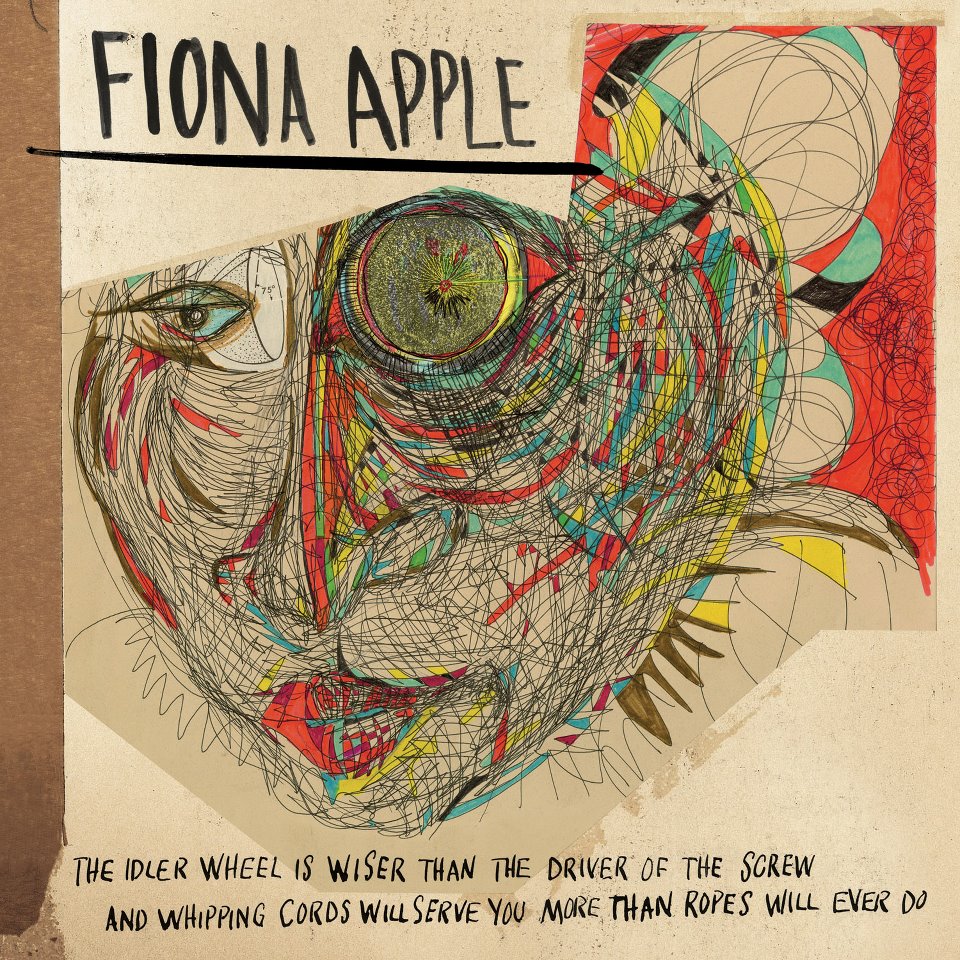
1.Fiona Apple The Idler Wheel…:


it’s great to have Fiona back after a seven year hiatus but this is hardly in line with the fiery stuff that we’ve come to love throughout the years. It’s an accomplished LP but Fiona has failed for once to find the balance between drunken insight and solemnity. The Idler Wheel sounds like the demo of some personal project that was awaiting its doll parts to become more complete. (METACRITIC SCORE: 8.9/10)


2.Swans The Seer:


first, how adorable is that cover shot of a baby wolf with human teeth. That aside though, the reception of The Seer indicates some post-world revelation when all one hears is either sheer melody or spoken word. Or breathing and repeated lyrics. I like epic recording like everyone else but at some point the songs on a LP have to be actual songs. That’s what The Seer plainly lacks far too often over its 2 hour run time. (METACRITIC SCORE: 8.7/10)


3.Leonard Cohen Old Ideas:


I get that as a legend one basically is given a free pass (Neil Young and Bob Dylan frequently benefit from this, to be fair) but Cohen sounds as if he fell asleep at points on this LP while being revived to growl the rest. This sounds like one of those audio book projects instead of music. (METACRITIC SCORE: 8.5/10)


4.Godspeed You! Black Emperor Allelujah! Don’t Bend! Ascend!:


this band has always been able to do the exact same thing on every record and get the biggest critical scores possible. They must be bored with all this excellence by now because critics aren’t even challenging them to include lyrics. (METACRITIC SCORE: 8.4/10)


5.Beach House Bloom:


when Popmatters gave Bloom its highest rating of the year the stage was set for all other publications to follow suit. Indeed, the hype surrounding the album began from late 2011. Its indicative then that most lists have not awarded it top ten status after all the time for repeated listens has set in. This band is a good one-trick pony but still, a one-trick pony. (METACRITIC SCORE: 7.8/10)


6.Andy Stott Luxury Problems:


impeccable production but nothing’s actually inside this huge wrap of bubbles. (METACRITIC SCORE: 8.5/10)


7.Flying Lotus Until The Quiet Comes:


I’m not big on tracks without much actual lyrics and this is why perhaps why I’m not frothing at the mouth like most critics over Flying Lotus. I love the synergy between jazz and electronic music but this is album number four by him…time to cough up some words bro. (METACRITIC SCORE: 8.5/10)


8.Cloud Nothings Attack On Memory:


Dylan Baldi’s vocals eventually wear off the novelty during the course of these eight grunge-meets-hardcore tracks. (METACRITIC SCORE: 8.3/10)


9.Jack White Blunderbuss:


White, one half of The White Stripes, was one of the most important artists of the last decade by any conceivable standard but here on his long overdue solo debut he seems more content for a trial run than a full out attack on our senses. (METACRITIC SCORE: 8.3/10)


10.Bat For Lashes The Haunted Man:


Natasha Khan’s third LP has some decent moments but she’s forgetting that it’s the up tempo beats that made her interesting in the first place.. (METACRITIC SCORE: 7.8/10)

Monday, November 19, 2012

Scandal: Season 2 (ABC, Thursdays 9 pm)


Winning Women


One of the many problems with Season One of Scandal was the constant reminder of the awesomeness of Olivia Pope (Kerry Washington). Even before we were formally introduced to her, her henchman Harrison (Columbus Short) was working overtime to convince Quinn (Katie Lowes) and us of her many legendary feats. When Pope finally emerged on screen in a smart white coat—flashing multiple languages at us briefly—she demanded everyone to take the deals she designed for them, no questions asked. In one instance she handed over the Russian ambassador’s kidnapped baby to him, sternly warned him to not mention it to the FBI because they’re “tired of me”. In another, she gave a young decorated war hero the “it gets better” speech…all this in the first episode of the series.

Olivia Pope fatigue thus set in early with Scandal (that and her ludicrous, “my gut tells me all I need to know”) but there’s more: Olivia runs a crisis-management team (Pope & Associates) and before that she worked in the White House as its Communications Director. She’s black, pretty, slim, wealthy and—the icing of it all—is the beloved of the US President. Even in modern-day America this is quite the stretch and the first five episodes of the series buckled under the weight of all this fabulousness. The show’s creator, Shonda Rhimes (Grey’s Anatomy)-- sensing the piling improbabilities no doubt—has had to scale back and retooled Pope more as a vulnerable, strong archetype and not some cold, stony deity in order to even get to this season.

It has started to pay off because Rhimes had to raise the stakes for the other women in the show as well. Not only is this plausible but it adds tension and allows for personal, emerging storylines. Moving beyond an all-knowing Olivia is one thing but it’ll be another thing to establish terra firma on the remarkable set of complicated women around her. This is then, the great promise Season Two strives to deliver: Olivia and her contemporaries all wanting to win and have everything at any cost.
So far, those many wins have collectively been against the opposite sex but three episodes into this new season, it is clear that some vicious girl-on-girl action will go down soon. Olivia may be used to grilling individuals over their questionable actions but now she’s the one being scrutinized. Her unquestioned grip on things is endangered not only at her firm by the judgmental Abby (Darby Stanchfield) but also—and more direly—the wife of the president, Mellie (Bellamy Young). The show has placed many objects between Olivia and Mellie’s inevitable showdown but it helps that the show’s writing no longer pits its action against what it feels we the viewer must be thinking in our heads while we watch. Now, Rhimes allows us to connect the dots and anticipate what is to come at a pace that doesn’t feel artificial.

While we wait patiently, Scandal has scaled down on inconsequential outer case loads to focus on complicated, inner ones. Abby’s obsession with Pope as a brand vis-à-vis the individual may be moving glacially but hints at some luscious drama. Quinn’s secret identity, less interesting, gets the lion-share for now but it’s a big gamble especially as how Pope seems to be in on it from the start.

This, in a very real way, makes Olivia the least interesting character on the show…well, next to Quinn anyway. Season 2 hasn’t put forth any new angle to contradict this and that remains the sticking point of Scandal: how, utterly un-scandalous its lead character is. Nothing screams unique or controversial just generic achievement, the type that excels in the blue-collar world. Even the main male lead, the president Fitz (Tony Goldwyn) is largely unremarkable. What keeps both going though is when they’re together the chemistry is obvious and charming to watch. Pope in isolation is singular but when cast within the context of her cases, her story begins to unthaw. “The Other Woman” (episode two) particularly hit home when we witnessed two ‘other women’ story-lines unfold in one.

At one point in this intriguing episode, Olivia comes face to face with Mellie, unguarded and with no one else in the way. It is a terrifying moment for both but the extent to which Mellie perfectly navigates it is the real terror. For all the awesomeness we’ve been instructed to have for Olivia from the start of Scandal, in these three seconds, we feel true pity for her and the hopeless situation she’s in. If you’re as much a political junkie as I am then don’t be surprised if Condoleezza Rice filters in and out of your sub-consciousness at precisely this moment.

RATING: 6/10

Sunday, October 21, 2012

Centipede Hz (Animal Collective) (2012)


Bees in the Trap


It’s hard to believe that three years have passed since Animal Collective dragged the freak/folk movement into the public sphere with their masterful Merriweather Post Pavillion. Yet, here we are all nervously twiddling with Centipede Hz, the band’s ninth studio release, trying hard not to compare it to its immediate predecessor.

So, let’s get the obvious out of the way: Centipede Hz isn’t as overwhelming or as great as Merriweather Post Pavillion but to dismiss it as some drug-induced experiment would be at one’s own peril. I suspect most indie critics would agree with me that in an ideal world the guys would have issued it as the opus before Strawberry Jam (2007) but the muse that moves Avey Tare and Panda Bear had other ideas. Fans can breathe easy though: for the fourth straight time, they’ve redefined musical possibilities and produced a genuine AOTY contender. Not that you could tell from the cool reception that has greeted it.

Which, when shown in contrast to the hysteria that greeted Merriweather Post Pavillion, misleads one to think that the band has cooled off. Nothing could be further from the truth but Animal Collective has already achieved that rarefied air only few musicians ever reach in their careers: that point where everything is sacrosanct and you’re making up the rules as you go along. The last bands to reach this level of irreverence were Radiohead and Outkast—both with immense stretches of genius—yet neither were pulling a new genre along its way.

Animal Collective is a freak/folk curiosity that, thanks to indie blogs, managed to spread and pupate into this pop/rock hybrid that their songs resemble today. If you go back as far as Here Comes the Indian (2003), the first LP they did to bear their name, you’d swear it’s a different band. They’ve done this gradually, not selling out their roots for a beach blonde sound, while adding a few condiments.

The trademark water-logged sounds and shake and bake rhythms are still present but Tare sounds positively on acid most of the time: both Moonjock and Today’s Supernatural explode with a lush pop of repetitive sound, reminiscent of Peacebone, the opening track on Strawberry Jam. Today’s Supernatural is the more ambitious track, with its belligerent mid-section and the primal howl only Tare can pull off (‘sometimes you gotta get mad!’) without being accused of trying too hard. Whereas Moonjock eventually entangles itself into sonic messiness, Supernatural remains compelling throughout, a testament to Tare’s craft. The Ariel Pink-ish Rosie Oh takes things in a different direction—a beehive of odd sounds verging upon each other into a sublime display of innovation.

The album slips into familiar skin thereafter; delivering major hooks (Applesauce, Father Time) or spiel that avoids hooks altogether (Wide Eyed, the return of band member Deakin). These are the first six tracks on the album, enough variation to polarize casual and die-hard fans but it is at that point that the economics of the band rises to the challenge. For, if it seemed Centipede Hz lacked the sonic depth of its predecessors, then that’s corrected immediately. New Town Burnout reaches out to the fan-base that goes gaga for Panda Bear’s solo releases. Monkey Riches drops guitars and a wailing Tare…a combination that always wins. No electronic odes to their families or teenage lives here, just sonic explorations of a current state of mind.

And who hasn’t wanted to peer inside the mind of Tare especially, the unofficial leader of the group. Who isn’t curious to ponder if he sometimes looks at Panda and thinks, “I should have the solo praise that you do.” If Merriweather Post Pavillion neatly answered so many questions the guys had asked themselves throughout the years, this LP leaves many more untouched. It has wonderful dialogue but it pulls up short at times before surrendering to its passage of time.

Maybe the real issue with Centipede Hz is the uncertainty of what it represents for the band and fans alike. The first half sounds like a real team effort while the latter half sounds like Avey and Panda constructed separate mini EPs without any consultation from the other. The sad thing is that those are the songs that hold the collective vision of the band best. You don’t need to be a critic to realize what this subtext means, or where it is, alas, most likely to lead to. You’ll be thinking on that while you hear the poignancy of the closing trio (Mercury Man, Pulley & the stunning Amanita). All three tracks stand among the very best Animal Collective has done in their long and great career. I can’t believe I’m saying this in print so soon after their apex but it’d be a real pity if they become the last three tracks of their immense journey.

RATING: 8/10

Sunday, October 7, 2012

Pariah (2011)


Choosing, not Running


Though it premiered at the 2011 Sundance Film Festival to high praise, most film goers would have only heard about Pariah through an unlikely source much later on: Meryl Streep. In what is becoming a colorful tradition, the great actress continues to highlight exceptional performances and good films in her acceptance speeches. Sure enough then as she lectured to us from the Golden Globe podium trip this year, she let slip the name of Adepero Oduye and Pariah.

Released officially after Christmas last year, Pariah is the tale of Alike (Oduye), a seventeen year-old who must come to terms with her burgeoning lesbianism. Set in Brooklyn, the film tackles the multi-faceted issue with complex characters and a social standard that seems unbending and reserved. Skillfully directed by newcomer Dee Rees, Pariah is every black parent’s nightmare when the obvious becomes, well, more obvious.

That sense of obviousness greets us immediately as we witness Alike (pronounced ah-lee-kay) and her BFF Laura (Pernell Walker) in a strip club checking girls out. Laura is a popular butch (the lesbian term/equivalent for thug) but has a genuine friendship with Alike. She looks out for her because she knows the struggles to map out an identity. Alike, like most neophytes, thinks she is unique in her self-discovery and issues, so she juggles her fears and boldness in giant-sized and baby steps respectively. She has already realized though that to experience her gay self, she must have separate identities. So, after the club, she makes sure to make her attire more ‘girly’ by the time she sneaks home.

Rees’ film thus hits upon a notion that is seldom explored in black films: the multiple identities gay teenagers have to use to adapt to society. Even more stunning is how clueless parents, especially mothers, can be to these realities that are right before their eyes. Alike’s mom, Audrey (Kim Wayans in a revelatory role) suspects her daughter is coming under the influence of Laura, even if she can’t state totally what that’ll lead to. Audrey is typically religious and homophobic…which makes her one on hand wanting to say something to Alike but on the other hand, not wanting her fears to be true.

Which leads her to turn to her husband Arthur (Charles Parnell) for help but he’d rather play it down as if Alike is going through a phase. It’s a sexist view but one that crops up all over the film: women being fluidly sexual. As one of the popular girls at Alike’s school says in passing to drop a hint, “I like girls but I love boys.” Alike only escapes her mother’s clutches at school, where she plays out her alternative self by seeking approval from her favorite teacher or potential love interests. One of whom turns out to be Bina (Aasha Davis), ostensibly introduced by Audrey herself. The two get close, much to the chagrin of Laura but whereas Alike feels real attachment, Bina is merely interested in experimenting until she gets bored.

Alike gets even less from her family. When they sits down to dinner, Audrey alternates between tense and playful at varying speeds that it’s no wonder she’s exhausted all the time. She never expresses it outright but in Alike she sees a type of freedom that she no longer has, the same type her husband continues to enjoy simply as being the head of the home. What Audrey never comes to connect is the control of her life and her own religious upbringing. She’s trapped in a loveless marriage but must endure it just for pretense. It’s what’s expected.

Which pulls to what makes Pariah so powerful: it seamlessly translates into any different set of circumstances that teenagers and parents face in light of a rigid social standard in place to normalize them and their issues. It does a superb job in also, on the other hand, to show us the frailties that face parents of a gay kid. That’s still something very hard for a parent to accept even outside of their own prejudices. Some of these prejudices, handed down from one generation to another, are the reasons why the gulf between parent and child remains so wide. The final scene between Alike and Audrey—raw, emotional—brilliantly plays this sad reality out. Audrey, alas, cannot look past the sin to love the sinner, daughter or not.

The adult life gleaned in Pariah—as in real life—is one of a homogenized and heterosexual lifestyle in a constant state of unison. It may tolerate male philandering but it hasn’t caught up to homosexuality yet. Alike leaves home fully aware of this and neither parent is strong or brave enough to stop her. They have, with or without reason, based on your own judgment, their own struggles to deal with. You see, they too are caught up in a different time-warp which no one else seemingly can understand or reach out to help...it’s just that they have no alternative destination to escape to.

RATING: 8/10

Wednesday, August 22, 2012

Channel Orange (Frank Ocean)/ Fantasea (Azealia Banks) (2012)


Coming Out


when did your name change from language to magic?’ (Madonna, ‘I’m Addicted’)

If you consume as much Twitter as I do then these last few weeks have engulfed you with a plethora of information on both Frank Ocean and Azealia Banks. If you’re not a music critic, into hip/hop, gay or all then you’d be forgiven for asking the one pertinent question prior to that time span: who the hell are Frank Ocean and Azealia Banks?

Ocean is a member of the notorious hip/hop group Odd Future while Banks’ claim to fame rests with a one-shot single released on Youtube that somehow managed to land her a record deal. It’s not as simplistic as that but both are young, black and gifted musicians. And ever since a poignant Tumblr letter written by Ocean to himself came to light, both are bisexual, still a novelty in hip/hop. Banks had already stated as much in interviews but with both releasing new-ish albums this month, it’s worth examining the one question left dangling in the air: are they worth the hype?

In short, the resounding answer is yes. Both artists are still climbing up the ranks as major players in hip/hop soul but with the tools available to them—mainly, the mixtape—they’ve made musical statements this year that no one else has or seems likely to duplicate. In Azealia’s case, the critical buzz on her has been red-hot since 212 dropped in mid-December last year. Major publications like NME and BBC music helped spread word and the song now has over twenty-three million hits on Youtube—forcing music execs to pay attention. To say 212 is brilliant, visionary music is an understatement…it’s still atop my list of the best songs of 2012. What the song helps to marry is the idea of the pervasive, underground gay dance music to the more mainstream hip/hop. The term used to describe it is house/hop or witch/house…the twinning of propulsive beats and smoldering vocals.

Fantasea, her “official” mixtape debut, doesn’t breach such celestial heights as 212 but the diversity on display makes clear what purpose the album serves: formal notice to lesser hip/hop stars like Nicki Minaj or legends on the verge of irrelevance like Missy Elliott that she, Azealia, is here now to reign. Most of the nineteen tracks here are for fun with a few being pre-released before now. Tracks like Neptune and Atlantis are just a playful interpretation of other hits but even then, Azealia finds innovative ways to explore her genre. The title track is the album’s first big statement and the awesomeness never lets up from there. F-ck Up the Fun makes the best Missy Elliott comparison to come her way yet, with its luscious filth and pre-programmed drums. Then there is Nathan, the standout that could have fit comfortably in any of Missy’s great albums, with its super crunchy beats. Nathan starts off a trio of exceptional, career-making grooves: L8TR (‘if it ain’t about a dollar/ I’m a holla at cha later’) is her love-for-money grab while Jumanji asserts her right to be a ‘real bitch, all day’ because at twenty-one she can.

After that she frames ideas on riffs of her contemporaries. It doesn’t diminish the mixtape but it does slow the tempo down. Her only hiccup occurs when she fails to add leverage to her themes with Fierce thus have it ending up being lesser because the obligatory drag voice in the midsection isn’t remarkable. It’s as if Azealia steps back in some gay recognition move that within itself isn’t interesting, hence needed to be edited out. Yet, Azealia knows she’s good and therein lays her secret joy…that self-belief that her raps can stand up to anyone else’s. We’ve been treated to her ideas so far but the true test is when her debut LP drops. For now, I’m content to let the kid enjoy herself without too much pressure.

Ocean has even done one step better given the context of Channel Orange. While some have questioned the timing of his letter outing himself, no one can deny the potency of this album. Given what we now know, the opener Thinking Bout You takes on even more lyrical significance. When he croons, ‘do you think about me still/ or do you not think so far ahead?, it achieves a tender affect. Like The Weeknd, Ocean is leading the new wave R&B school of young men who are looking past R. Kelly-esque frankness to connect to something far more significant: love. That’s the stunning thing about Channel Orange…it’s a long testament to newly discovered feelings and responsibility from a purely masculine perspective. For those fearing some gay-fest confessional, you’ll be disappointed. If you’re looking for blissful blues the way Usher or Chris Brown will never deliver, then this here is your pail of water. When I say Ocean reaches back to channel Stevie Wonder and even D’angelo here you get an idea of the dedication that went into the album.

The soulful Sweet Life (‘why see the world/ when you’ve got the beach…’) achieves a stunning, complex thing with its piano-drenched composition. What sells it so convincingly though is Ocean’s gorgeous vocal work as it expands to heights his Nostalgia, Ultra mixtape didn’t hint at last year. Pilot Jones is the type of sexy kitsch that only D’angelo can pull off—you know the panty-dropping type of track that oozes nothing but sex. Yeah, it’s that stunning. The album’s centerpiece though is Pyramids, a ten minute attempt to bind human life and sexual tension from ancient Egypt to now. It best reminds us of his brilliant Novocain last year, only it’s far more epic. The rest of the songs keep up this amazing level of consistency and confidence, so much so that it’s already had me wondering what he’ll come with next.

While the debate about his sexuality continues to shade how we see him as a musician, Ocean has helped to widen that grasp of understanding of an alternative reality deep within urban America. Channel Orange is a stunning peek into that type of adolescent world of half-grown men and-- if you watch HBO’s brilliant series Girls-- immature women, all who are waking up, or in this case coming out to new, frightening realities. Channel Orange is the best male R&B album since Rahsaan Patterson dropped Wines & Spirits five years ago, and its way better than that. He could have been a coward and shut the world out of what he was feeling, become a closet case but thankfully, he’s trusted us enough to air his fears and experiences. That’s when the best type of soul music gets done, when something real jolts an artist, opens up their eyes truly for the first time.

RATING: Frank Ocean 8/10
Azealia Banks 7.5/10

Newsroom (HBO, Sundays 9 pm)


Devil in the Details


Aaron Sorkin’s new dramatic series Newsroom starts out exactly as one expects any show about television journalism to: by attacking the president’s policies. The darkness lifts over voices contemplating whether Obama is socialist or not while Will McAvoy (Jeff Daniels) listens while being doped-up and slightly bored. He looks around---so familiar is the routine—and for a few seconds thinks he spots a particular female face in the crowd. The moment is disorientating until the moderator draws him into the discussion.

Because what happens next is Will getting unpatriotic and going H.A.M about the missing past greatness of America, so much so that it leaves everyone stunned to silence. Bridges plays the character in this moment brilliantly, his movements natural within their jaded context, the words espoused with consummate ease. The show ends and while he is being castigated for his behavior, he asks the most disturbing question of the night: ‘what did I say in there?’ Ouch. Right away, we get to realize—same as Will—that this traumatic incident has had repercussions. He’s forced to take a vacation of sorts because news anchors can’t afford to lose screws for long. People get iffy and long-suffering ills resurface. So, Will walks into his office the next time and finds everyone gone—shifted to another program, all by choice.

To Sorkin’s credit, Newsroom does not seek to bite off more than it can chew by remedying all journalistic ills. It seems headed that way once we’re introduced to the supporting cast, a whirl of overstated dialogue and speeches but once McKenzie McHale (Emily Mortimer) enters the fray then all is saved, literally. It’s a timely intervention because for all of Sorkin’s genius (The West Wing, The Social Network) the first episode swerves unevenly throughout its hour. There is improbability aplenty especially in the shape of Charlie Skinner (Sam Waterston) and his allegiance to Will and the network itself. Sorkin seems to realize this because if episode one (We Just Decided To) was iffy then episode two (News Night 2.0) is astonishingly clever. From the opening banter between Will and McKenzie arguing about the set up for the show to the meeting room discussion, the pace of the repartee is brilliant and biting (‘FOX really hired someone with three Mohammeds in their name?’).

Sorkin’s most salient points here are not aimed at the stories being covered but the people presenting them. We’re viewing their functions in real time and seeing how all those pieces work in tandem for one whole presentation. And it is fascinating, especially how McKenzie runs the show and quips her methods to everyone. Her past relationship with Will frames their current situation but Sorkin has pared it off with their dedication to work. In a weird way, Skinner is Sorkin on film and Will is clearly Keith Olbermman-based. It’s anyone’s guess who McKenzie resembles in real life but Mortimer is a delight to watch as the hassled producer who must inspire her team while earning Will’s trust again.

The show succeeds on these basic levels along with the gripping stories it presents. The final minutes are dedicated to the news itself and Bridges at his best: when a beauty queen arrogantly states that the America she grew up in didn’t allow such rampant immigration, he shuts her up that at twenty that is exactly the type of America she grew up in. When she unwisely proceeds to state not in Oklahoma, he retorts especially in Oklahoma. We even get the ubiquitous Sarah Palin moment (‘the Dutch, they are known in Norwegia…for dykes’). This ambitious stretch of tragic-comedy isn’t unique to Newsroom currently but unlike Veep (hilarious in its own right) all persons in charge have their thinking caps on and buried deeply within their skulls. That is the Sorkin magic.

It figures that a series critical in its assessment of the media wouldn’t exactly find huge amounts of love by the same media now assessing it. Quite a few reviewers (after just the first episode) have called it self-congratulatory and smug, not even aware of how ironic that must seem. Sorkin’s gift has always been to underpin the realness behind official lives…not to present them merely as represented by the viral evidence we the general public go by. He understands the manipulation of such a process and the thin line those in public office tread to maintain the status quo. Newsroom, more than any other show this season so far, puts in context the frustration and awesomeness of news-making, devil in the details and all. It’s a scenario I wonder if our own media entities and personalities even go through any at all.

RATING: 8/10