Monday, December 2, 2013

2013: Top 15 Worst Films (That I Saw):


It figures that in a year where most critics have struggled to come up with great films to highlight going into December, a bumper crop of really horrible ones flourished. This usually is a top ten list but I decided to add five more in recognition of the crap that we all went to see this year.


There may be more or worse films but these were the ones I saw…


1. Carrie: a remake of the Stephen King horror classic, this time so painfully wrought with clichéd expressions and lack of a cohesive script. Both leads should have known better.

MY RATING: 0/10


2. After Earth: Will Smith and his son…how the hell did this idea pass any studio meeting?

MY RATING: 1/10


3. A Haunted House: it matters little what Marlon Wayans comes in once its comedy, prepare for gut-wrenching crap.

MY RATING: 1/10


4. Scary Movie 5: Charlie Sheen and Lindsay Lohan are in this unfunny franchise…you need no further deterrent.

MY RATING: 1.5/10


5. Texas Chainsaw Massacre 3D: boring and utterly pointless, we don’t need another remake.

MY RATING: 1.5/10


6. Gangster Squad: Sean Penn acts as if he has lead in his mouth and poor Ryan Gosling’s downward spiral continues with this film that misses its mark despite packing an impressive cast.

MY RATING: 3.5/10


7. Mortal Instruments: City of Bones: we’re accepting of all these fantasy trilogies but I’ll give this one the Gandalf quip…”you shall not pass!”

MY RATING: 3.5/10


8. The Lone Ranger: Johnny Depp…sigh.

MY RATING: 3.5/10


9. R.I.P.D: the undead battle fellow undead…police versus bad ghosts. Pass.

MY RATING: 3.5/10


10. Beautiful Creatures: yet another pointless coming-of-age witch story.

MY RATING: 4/10


11. The Hangover III: the characters starting to get collectively annoying now.

MY RATING: 4/10


12. Hansel & Gretel: Witch Hunters: Jeremy Renner really should know better.

MY RATING: 4/10


13. The Host: had a fairly solid story but the boring levels of this film are unmatched in Hollywood.

MY RATING: 4/10


14. Oz The Great and Powerful: but for the talking monkey, this would have been totally forgettable.

MY RATING: 4/10


15. Percy Jackson: Sea of Monsters: still here wishing the lead characters drowned mid-way through this film.

MY RATING: 4/10

Sunday, December 1, 2013

Top 10 Most Overrated Albums of 2013:


Every year there are those albums that critics proclaim earth-shattering, even before they’ve been released. What this portrays though is a position taken on a band or solo artist so held in reverence that it matters little what content they put out—it’ll be sacrosanct. Here are this year’s top ten such holy relics…


1. Vampire Weekend Modern Vampires of the City: if anything, MVOTC reminds us that no matter the new suits or riffs involved, Vampire Weekend remains a band and not a lead singer tagging a few friends along for a joyride. Whether one views this as a blessing or limitation is totally up for interpretation but Ezra Koenig hasn’t broken any seismic new ground here. Somehow critics forget how enthused they were for the early folksy stuff which has been rep-laced by frosty pop/rock songs with stiff non-choruses and a clear lack of inspiration.

METACRITIC: 8.4/10


2. My Bloody Valentine MBV: the band’s first release of new material since their critically-acclaimed album Loveless, way back in 1991. Needless to say, critics were stumbling over themselves to proclaim a triumphant return but MBV shows that the two decade-long silence from the band had their creative process on ice and this was merely to be a celebrated thawing out. MBV sounds like Loveless reject ideas, and there’s a reason they didn’t make the final cut. It was no surprise then to discover that half of the songs were recorded prior to the band’s temporary break-up in 1997 and the rest of the songs finished more than six years ago. The albums sounds dated with no change at all to the production template and lead vocal delivery.

METACRITIC: 8.7/10


3. Daft Punk Random Access Memories: when best-of-decade lists pop up in a few years, I’d be very surprised if the enthusiasm for this record continues. RAM is an ode to 80s-era disco music and while that’s admirable but instead of lauding the past of others, Daft Punk has dragged us into an hour-long expose into their own history and its pretty bland. These are not even actual songs but mood music that occasionally throws in vocals. The first half is particularly sleep-inducing.

METACRITIC: 8.7/10


4. Deafheaven Sunbather: Sunbather's a seven-song collection that fuses into a massive 60-minute piece. The sequencing is pretty much your standard heavy metal template: scream, shout, whisper then scream again. It doesn’t extract anything new, which within itself is a big issue because critics then to give the genre a free pass, hailing every release as some great leap forward…as indicated by its astonishing Metacritic score.

METACRITIC: 9.2/10


5. Boards of Canada Tomorrow’s Harvest: critics have been yapping non-stop about this mostly silent LP as if some great insight has been unearthed by its release. Stepping into a near-emotionless space and failing to introduce anything new to the duo’s sound, the album boasts the same amazingly layered atmospheres of its predecessors but lacks any sort of differentiating aspect.

METACRITIC: 8.5/10


6. Bill Callahan The River: The first thing you notice is that Bill Callahan is in no hurry on this album. Need something to put you to sleep…look no further.

METACRITIC: 8.3/10


7. Kurt Vile Wakin On A Pretty Daze: Kurt Vile is a man who routinely elevates lyrical idleness to an art-form and while this is his best album by far, its hardly earth-shattering stuff. His songs often seem to get stuck in an arc of plausibility then he creates a melodious reverb around it. It’s a nice ploy but he’s gotten far too comfortable in this obscurity.

METACRITIC: 8.2/10


8. Run The Jewels Run The Jewels: so, Killer Mike and El-P decided to team up and while that enthusiasm bleeds into every facet: into the no-filler form of a quick-fire 33-minute run-time, the album falls flat every time Killer Mike tackles a chorus.

METACRITIC: 8.5/10


9. The National Trouble Will Find Me: Most people attribute the National’s escalating popularity to their reliability: every National album has been more ambitious, accomplished, and successful than the one that came before it. Not this time though---here the guys just sound bored and running through the motions.

METACRITIC: 8.4/10


10. Justin Timberlake The 20/20 Experience: Part One: a totally different phase of the Timbaland/Timberlake relationship, the kind of equal-needs project that both are looking to use to re-establish their brand. Both men satisfy themselves in weird ways on the album but the concept-model is set from the opening song, Pusher Love Girl, an arcane, over-long idea. Like most songs here, Timberlake puts in a vocally-pleasing effort only for Timbaland to pitch his still-formidable beats long after Justin has ended his contribution. This makes for unchallenging pop music, the type of safe idea that isn’t terrible but far from exceptional, merely allowing both artists to engage in respectfully avoiding each other’s flow. Timberlake has said that there was no aim or goal for the LP and that’s exactly what we got. This seems a lock for the upcoming Grammy awards.

METACRITIC: 7.5/10

Saturday, November 30, 2013

Been a while...


Six (6) months of virtual silence but with year-end lists just around the corner...i'm back!!!

Gear up....

Sunday, June 30, 2013

Modern Vampires of the City (Vampire Weekend) (2013)


Wallflowers United


I remember five years ago when Vampire Weekend’s self-titled debut hit the internet and the main concern from its detractors was how this upstart Ivy-league band was just a set of poseurs. There was easy charm to the record but quite a few critics played hardball, berating the band’s clean-cut preppy Afro-pop sound. Mark you, a band can do a lot worse than being the new Paul Simon but the debut succeeded because the juxtaposition of influence and lyrical affluence was a great fit. It’s become a template even, one that has come to define Vampire Weekend’s sound and shaped their young discography. Flash-forward to now and its stunning how these very same critics have become the band’s biggest fans, bombarding blogs with headlines that proclaim Modern Vampires of the City (MVOTC)as some sort of revolution in popular culture, let alone indie rock and pop.

I disagree but it’s not hard to find common ground in liking the band. Even if you have just a cursory interest in contemporary rock music, they’ve always been a hip, cool band to dig. Their two previous albums still hold up as mostly fresh material even if it’s clear that, sonically, the guys have expanded their territory with MVOTC. This is as it should be and not the other way around. This has been the band’s biggest drawing-card: the willingness to grow into diverse sounds and run with the mood.

At nearly forty-three minutes, Modern Vampires of the City is the band’s longest album and the reason is the lush arrangements involved. They’ve proved themselves masterful at production before but this time we witness them luxuriating in it. What’s been tricky for them is presenting a singular point of view and that’s where the songs work hard to fall in line. At times it sacrifices lyrical clarity just to compensate but make no mistake; the band is arming itself for the long haul.

I’m not sure if the LP’s title is a stab at reinventing themselves but out goes the Afro-pop for the most part and in comes something closer to Americana. Outside of the dyslexic opener (Obvious Bicycle), we get slick, bigger sounds than we’ve never been privy to. Unbelievers works up some jangly fun, especially when the piano comes crashing in even though its crispness feels a bit stiff. Step goes even further with lead singer, Ezra Koenig cooing that he’s “stronger now” and in the process manages to sound dated yet brand new. It’s a clever trick-- a new stylish one we haven’t heard from them before. Diane Young apes Elvis Prestley’s youthfulness without blushes, a surprising risk that pays off. These are the two instances where the band’s wit seeps through its immaculate conception. It’s a marvel to hear Koenig lose himself in the track and the band responds with thunderous guitar riffs.

Things go downhill from there, or, rather, get predictable. Hannah Hunt slows the tempo of the album but gives us the most endearing moment of Vampire Weekend’s career: as it reaches the three minute mark, Koenig give us a sudden emotional shout (‘though we live on the US dollar/ you and me/ we got our own sense of time’) and it’ll send shivers through you. It’s one of those moments where music connects to the listener in an inexplicably vital way.

It ends abruptly but as I go through repeated listens, I can finally put my finger on why the band hasn’t grown on me as it has to others. Even when compared to other lead singers, Koenig hasn’t yet perfected the art of defining himself as a solo voice that commands awe. That’s what is missing on MVOTC…why it’s a good little record but not a great one. It’s why Ya Hey apes nu-reggae instead of redefining it. It’s why the ender Young Lion is blah instead of a sonic blast of awesomeness. There’s too much obedience in the band’s sound, as if they only have one uniformed and polished way of doing things.

Therefore, if anything, MVOTC reminds us that no matter the new suits or riffs involved, Vampire Weekend remains a band and not a lead singer tagging a few friends along for a joyride. Whether one views this as a blessing or limitation is totally up for interpretation but Ezra Koenig hasn’t broken any seismic new ground here. He’s trying clearly but if the last decade has proved anything with indie rock bands, it’s that the restless energy of the lead singer always splits away eventually and the band is either stronger for it or dissolves. I’ve been listening to Wolf Parade’s exceptional debut of late (2003’s Apologies to the Queen Mary) and can’t think of a better example as to what can fix this hold Koenig is in. He should listen to how that group’s lead singer, Spencer Krug utterly loses himself in tracks like I’ll Believe In Anything and Sons and Daughters of Hungry Ghosts and recognize the transcendence. Koenig doesn’t have the same level of genius Krug has…no other male in rock does currently but the point is that it is time for him to try to be more like Krug or hand the reins over to someone else in the band at times so we can hear what new ideas they may have.

RATING: 7/10

The Purge (2013)


Good Fences That Make Good Neighbors


Last December, barely a month after being re-elected, Barack Obama unexpectedly found himself in Newton, Connecticut facing the American press teary-eyed. It wasn’t a belated rush of emotion after pulling through a rigorous campaign but from the chilling aftermath of a violent incident. A young man, Adam Lanza had killed twenty-six people including his own mother before committing suicide at the Sandy Hook Elementary School. As the President wept for the victims and declared that such an incident must never occur again, the debate about gun control intensified. Four months later a proposed bill that would restrict gun control in America failed to pass in the Senate by a mere six votes. The message to Obama was clear: don’t mess with our guns.

To be fair to the President though, it is a message that all his predecessors have had to heed as well. Americans guard their right to bear arms almost as fiercely as their right to vote. Whatever compromises either side of the gun control debate will come to remains largely obscured by the unwillingness of citizens to be unarmed if or when attacked.

Fast-forward to 2022 and James DeMonaco’s film The Purge gives us one such compromising outcome. The film posits the idea of the American government (dubbed the Founding Fathers of America) controlling crime and unemployment by having a national purge—a twelve hour period once a year where citizens can “release the beast”. That essentially means they can do any crime without consequence, including murder while emergency services go offline.

The film begins on purge day with a busy James Sandin (Ethan Hawke) communicating with clients of his pricy home security systems. He’s made a fortune from them, never missing an opportunity to remind clients that it’ll keep them safe during the annual event. As he heads home, he engages in banter with a neighbor and can’t help but boast about his own new system. His wife Mary (Lena Headey) is busy in the kitchen with dinner while their daughter Zoey (Adelaide Kane) is sneaking her boyfriend out through her window. Both of them interact with other neighbours in a way James does not: Zoey silently watches a man sharpening a huge machete while Mary tries to brush off a nosy Grace (Arija Bareikis) who offers her cookies and gossip about the Sandins’ home. The two women exchange fake pleasantries then move away from each other and it’s easy to see derision between them.

That disinterest is within the family itself as they eat dinner and exchange fake dialogue. As sirens indicate the commencement of the purge, James surveys the outward cameras of the property and is mildly surprised to see two neighbours outside about to take part of the ritual. It doesn’t alarm him that there would be people in his neighbourhood who would do so but he is taken aback that the two were even friendly. His own derision towards Grace shows up clearly when he sees that she is keeping her annual party and thanks God that the family was not invited this year. As the emergency broadcasting system kicks in, the family separates in the house to get away from each other. Again, James doesn’t seem concerned that he isn’t able to control the happening in his home but as he surfs the Internet for a yacht to buy, he hears the security system being disbanded. His son Charlie (Max Burkholder) has let a stranger into the house. While he’s reeling from this new situation, Zoey’s boyfriend appears on the stairs and points a gun at him. He fires at the young man, fatally wounding him but seems more concerned about the stranger.

At this point The Purge has already touched upon enough motifs to turn out to be a decent thriller but just as masked strangers appear at the front door demanding they turn the stranger over to them, the Sandin clan-- through some clunky writing by DeMonaco, begin to unravel. So too does the structure of the film as well as common sense. Gaps in the plot begin to get worrisome and no one seems in control of their actions. For example, when the strangers issue their threat, the power inexplicably goes. It’s a stretch to think James wouldn’t have back-up power so the last thirty minutes are played out in virtual darkness. Even the clever twist at the end gets betrayed by a sense of randomness, which undermines the attempted suspense.

James never gets to see that his sense of security literally wasn’t in his shabby product but those around him, the human element he’s so comfortable in swindling for profit. He’s allowed greed to cloud his judgment and family’s own security with Mary only at times feeling remorseful herself. Though he’s framed as a bit off-kilter, it’s up to Charlie to bring his parents around to realizing that doing the right thing is the only thing that matters. He knows that it doesn’t hurt to be nice to your neighbours even if it’s only on purge night. You’ll definitely want them on your side then.

RATING: 5.5/10

Thursday, June 13, 2013

HALL OF FAME:


The Godfather (1972)

Based on Mario Puzo’s novel, The Godfather has simply become the standard by which all other mob films are judged against. The film takes a look at the Corleone family, in its most turbulent decade of existence. At its heart though lays Italian traditionalism and the deep bond of family. Its main protagonist Michael (Al Pacino) literally becomes leader of the underground after his father falls victim to an assassination attempt and heart attack. Director Francis Ford Coppola paces his action with wondrous clarity: from the opening wedding scene to the closing spell of dread Michael sets in motion. In between, we see a family struggling to keep itself together as greed and ambition seeps in.

The importance of the film is widely knows: three Oscar wins, selected for preservation by the US National Film Registry in 1990 and permanently in the top five list of greatest Americans films irrespective of the decade compiled. Marlon Brando won an Oscar as Vito, the patriarch and influenced a generation of method acting.

Saturday, June 8, 2013

HALL OF FAME:


Monster (R.E.M) (1994)

R.E.M’s ninth and most controversial release inches towards its twentieth year of existence with no apparent ease in sight. The band had been at the heights of its powers and, like Dylan before them, changed direction and plugged into a harsher rock sound and fans were stopped cold in tracks. Maybe lead singer Michael Stipe felt out of place amidst the grunge love-fest that was permeating the air but history will prove eventually that this is the band’s best album.

It sure is the loudest: the twelve songs that make up Monster are all jarring, disorienting yet shockingly human. Stipe and company had reached a frustrated point with their celebrity and it had started to affect their personal interaction. One can hear it in the hiss that singles out Stipe on the brilliant King Of Comedy to the point where he lashes out towards the end, “I’m not commodity” repeatedly. The album also touches on sexual frustration quirkily on I Don’t Sleep, I Dream, where he ponders if he gives good head and mother envy on Crush With Eyeliner. And no R.E.M LP could be complete without Stipe stretching his gorgeous vocals over some geeky, intense emotion and one listen to Strange Currencies reinforces the fact that no band has done emo-rock half as well since. No introspection could ignore the album’s centerpiece though, the touching Cobain tribute, Let Me In. It’s a mere three minutes of guitar shards and a solemn Stipe berating that other superstar for not letting us into his life. After all these years it remains one of rock’s most harrowing moments.

HALL OF FAME:


Apologies To The Queen Mary (Wolf Parade) (2005)


The debut of Wolf Parade still stands as the most exciting release of frantic rock music in the last decade. For starters, it introduced the world properly to the genius of Spencer Krug and for that alone the album is significant. Wrapped within the sardonic title though is some stunning emo rock: Krug’s vocal work reaches the same brilliant heights achieved by Bowie on such classics like I’ll Believe In Anything and Dear Sons & Daughters Of Hungry Ghosts---which features the immortal line, ‘God doesn’t always have the best goddamn plan, does he?’ The beauty of the Krug/Dan Boeckner combination though remains the juxtaposition of lyrics to production. With a voice like Krug’s virtually anything touched will mine gold but the album began the contemporary trend of dissecting the male perspective in rock music, in relation to family, past experiences and bonding. Who can forget the first time the opening blast of I Am My Father’s Son… hit you and every body part sat up to that groovy beat? Or the hollowed sadness experienced when Krug slows it down to fall behind the guitar beat of Dinner Bells?

Of course this is a group effort but it’s the aformentioned Boeckner’s production that plays the best foil for Krug pretty damage. The group’s done some decent stuff since but they’ve never been able to capture this essence again, which would have been expected. Even upon release, critics fell heavily in love with the album; all the major online publications fell over themselves to lavish praise. Give it a spin and fall in love with it again.

Friday, June 7, 2013

HALL OF FAME:


12 Angry Men (1957)

The directorial debut of the late Sidney Lumet, 12 Angry Men remains—even after fifty years---a stripped-down, thrilling landmark look at the American justice system. Shot in black & white, it traces a murder and the reaction of the jurors deciding the fate of a young poor teenager. Lumet creates unbearable tension despite the film taking place essentially in one setting: a jury room. We get no names, just the number in which the men sat in on the trial. They argue, agree, and insult each other and even bond in a weird way. The jury room becomes a hot-bed for cultural stereotyping…we see rank discrimination and attitudes shifting with moral values. In the end, juror number 8 (a brilliant Henry Fonda) manages to convince the hard-hearted men to see things from a different perspective and open up their minds to the possibility of the youth’s innocence. Within the period, each juror undergoes his own metamorphosis and this reveals Lumet’s real skill: that of exploring ideas that keep us riveted in our seats.

In 2007, the library of Congress selected it as culturally important. A honor well deserved and overdue. Though it didn’t make much impact at the box office or snare any of the three Oscars it was nominated for, today the film is considered a classic. It has even shaped a lot of legal minds in their pursuit of justice, most notably Sonia Sotamayor, a current US Supreme Court judge.

Sunday, April 28, 2013

Game Of Thrones Season 3 (HBO, Sundays 9pm)


Steady As She Goes


Ten years ago Olive Senior published a stunning poem in this newspaper called ‘Leaving Home’. Like most of her work, it built its way to a cataclysmic ending that the beginning was pointing to all along but one had to be paying keen attention for. The poem analyzed the journey of womanhood, noting presciently the, “cruelty of choice”. She then dropped a mere four words to end it—which remain among the most devastating lines ever penned by a Caribbean writer: “here’s the knife”, “yourself”, “executioner”, “midwife”.

For the women of George R. R. Martin’s Game of Thrones, these four words have been shaping up to define them all at varying points in the series. If the first two seasons of the show have set the platform for male egoism to take a sharp fall, then it has stealthily shown the female counterpart of it as set to rise. Season two in particular charted very dedicated courses tied to choices that need delicate balancing acts. None more than the manipulative Queen of the Seven Kingdoms, Cersei (Lena Headey) who visits her wounded brother Tyrion (Peter Dinklage) to glean information as well as to find out if he’s discovered the many lies she’s told on him. Cersei, as the “knife” of this equation dices and shapes policy once it suits her purpose. So far, she’s had to outwit men to get what she wants. No real female has ever stood in her path but now with her son Joffrey (Jack Gleeson) taking a wife she didn’t choose. Cersai is for the first time in the show being replaced or, rather, substituted. Joffrey has fallen under the influence of Margaery Tyrell (Natalie Dormer), literally a younger, sweeter version of Cersei.

Both women commence battle with each other almost immediately with back-handed compliments about their attire. For once, Cersei blinks first by testing Joffrey’s loyalty. When it fails, Cersei realizes the quicksand she’s standing on and maternal instinct gives way to a state of attrition. This is compounded by Joffrey’s own cruel-based rebellion.
Unbeknown to both women though are the outward forces coming to the kingdom. Lady Stark (Michelle Fairley) has several axes to grind—revenge being her chief concern and she’ll be the “executioner” of the entire Lannister clan if it’s the last thing she does. For the moment though, she too is faced with uncomfortable choices and their consequences. She made a deal with king-slayer Jaime Lannister (Nickolaj Coster-Waladau) and let him escape much to the chagrin of her son Rob.

And crossing the sea with her dragons gaining strength is Daenerys Targaryen (Emilia Clarke) building up her converts as she goes along. Daenerys more than any other character in the show exemplifies “yourself” as she’s had to find inner belief more quickly than the rest. Game Of Thrones has gambled often on the separation of her to the other characters but it has paid off so far even though her wheel is still pretty much still in spinning mode. When her advisor Jorah exclaims that her dragons are growing fast, she retorts immediately, “not fast enough”.

As for the “midwife” persona, several women are in such a transitory state because to yield their power, they have to rely on men for its execution. Season three’s relentless march to power is being matched evenly by the new discourse between these ambitious women. Up to now, they’ve had only men to consider as opponents but as things escalate to another great war, they’re realizing that it is each other that may prove sticky to dislodge. Episode two greatly shows how they approach arguments with the men juxtaposed to when the men are beyond earshot. While Cersei remains tongue-in-cheek as Joffrey continues to alienate her, Sansa (Sophie Turner) is privy to the tart-tongue of Lady Olenna (Diana Rigg) in a precious moment of down-time. Olenna is the best new addition to the show, full of authority yet understanding. When she traps Sansa into bad-mouthing Joffrey, she reassures her, “are you frightened, child. No need for that… we’re just women here.”

Yet you can see the reason for Sansa’s concern. She’s still little more than a child playing in the league of older, wiser women. Even Margaery has more cunning than Sansa has charm. After the chat, Sansa sits, eyes lowered, full of defeat and emptiness while the other two women start mentally planning for the way to deal with Joffrey and, by extension, his sadistic streak. Sansa hasn’t yet mastered the exhausting task of being such a woman nor—as she realizes now—will she be. Her fate has already been decided by her choices. She never understood the stubborn quality in her mother yet was kept in awe always of Cersei for the same reason. As she tries to find her new place in the kingdom, both mother and erstwhile mother-in law now yearn for her return to their side. They have different reasons obviously but that she’s a valuable asset is not in question.

RATING: 8/10

Saturday, April 27, 2013

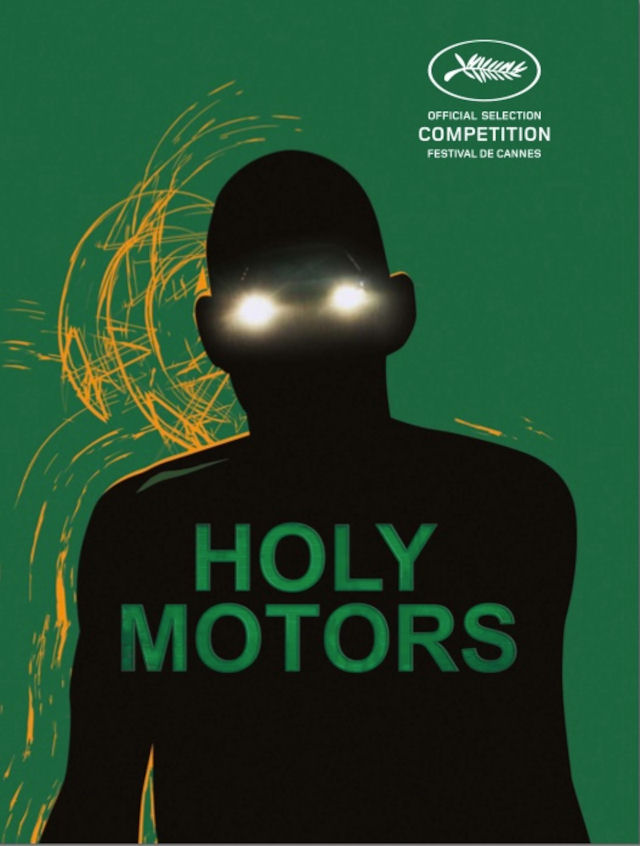
Holy Motors (2012)


Play by Play


One of the great disappointments of this year’s Oscar nominations was the absence of the French film Holy Motors from all the categories. The film had left most critics salivating at the Cannes Film festival and scored rave reviews especially for its unique perspective of its art-imitating-life plot.

It starts subtlety by juxtaposing the cinematic experience as is now—persons silently watching a movie—to how it will be in the futuristic manner director Leos Carax chooses by having our protagonist Oscar (Denis Lavant) literally jump into his ‘role’, seemingly inside the movie theatre. Oscar wakes up; puts on his glasses and forces open a door that leads to a flashing light. He passes through another door and lands right in a stunning shot of him, towering above the movie-goers while a giant dog prowls the aisles. Carax’s homage to film becomes immediate yet lurking beneath this abundance of rich imagery is human passion itself and self-sacrifice, the type that, like the dog, goes unnoticed and unappreciated.

Oscar is an actor who gets chauffeured around to his roles in a white limo that’s driven by Celine (Edith Scob) who clearly doubles as his personal assistant. The limo too serves a double purpose—a dressing room, where he changes costumes, a place to apply make-up and rehearse lines for his next project. We follow as he changes into an old crone begging beside the Seine; a crazed, barefoot troublemaker in an ill-fitting green suit kidnapping an American model (played by Eva Mendes) during a photo shoot and carrying her away as if he were Quasimodo; a hit-man hired to kill his doppelgänger; a father concerned for his daughter's safety; and the cheerful leader of an accordion band performing in a candlelit church.

As with most French directors though, Carax uses everything compressed in Holy Motors to mean something else or serve as a heavy dose of symbolism. The limo ride is clearly the path all actors have to take and Oscar’s many roles seeping into each other exemplifies the interchangeability of an actor’s work. These are the obvious points but one would have to be versed in Carax’s own previous works and influences to pick out the rest.

Just like The Artist before it, Holy Motors is an expose on artistic insight and the metamorphosis that has taken place. The film moves at a sinewy pace, dragging cinematic changes as it goes along to the point where the audience can no longer tell the difference between acting and the real thing. Oscar himself is slowly losing grip on his own reality, a point reinforced when he accidentally runs into a former lover Jean (Kylie Minogue) and the tenderness they share reminiscing. As they roam the street, you realize this is real even if the invisible cameras are never shut out. He quizzes her on her appearance (is is really hers or for a role) and carries her up steps where she belts out a tune before getting into character and jumping to her “death”. Oscar’s sense of reality betrays him after he just barely manages to get out of the scene in time to see Jean’s lover racing up the stairs in pursuit of her. As Oscar strolls out, both bodies are on the ground, Jean’s brains splattered along with blood. He loses it and races for his limo. For a terrifying second, you can’t help but think that, at last, Carax is about to unravel some hidden meaning to Holy Motors but instead it soldiers on fully aware that its appeal is its aloofness.

This aloofness is spurred on by the final two scenes: Oscar reaching “home’ to his pet gorilla and saying goodnight to Celine. She drives away, signaling the end of the day and eventually parks at Holy Motors, which we can see is the hub for the vehicles. She gets out joining the other such drivers, hair down and puts on a green mask. “I’m coming home”, she whispers into a cell phone and strolls out of our sight. As the lights go out to leave us pondering if Celine is unto her own acting adventure, Carax arrests us again with a bit of magical realism. The limos begin to speak to each other and the moral point of the film becomes clear.

Depending on your patience and appreciation for art-house films, this will either spoil or enhance your opinion of Holy Motors. It is visually stunning but life as viewed through Carax’s lens is unending and repetitive. It’s also secretive and resigned to fate, only the limos of the industry grouse openly about where next film will leap to and if it will need them anymore. Already the film shows how, like high definition (HD), enhanced and real the viewing experience is and how much more people want from it. Oscar, like the other weary actors are only starting to suspect what Carax built this gem around: when people get what they want, they never really want it the same way ever again.

RATING: 8/10

Sunday, March 31, 2013

The 20/20 Experience (Justin Timberlake) (2013)


Resurrection Moans


Ever since he went solo and teamed up with hip/hop soul visionary Timbaland in 2002, Justin Timberlake has been the widely-accepted standard for white soul. His entreating debut Justified was a satisfying first glimpse at how this planned transition could work and did produce one of the decade’s greatest songs (Cry Me A River). The album, crucially, didn’t fall away in structure if one took that masterpiece out of consideration, owing much to Timbaland’s genius for groove utility. Sure enough then, when Future Sex/ Love Sounds dropped four years later, Timberlake became the hottest piece of white meat in the music industry. It remains a titillating piece of pop candy, full of treats and trademark Timbaland synths and experimental grooves. Coupled with his handling of Nelly Furtado, it remains Timbaland’s last great year as a music producer.

This is an important point to make because, as you’ve become to realize, the state of Justin Timberlake’s music is dependent wholly on what Timbaland brings to the studio and that hasn’t been much in the past seven years. In that long barren stretch we’ve seen Timbaland’s vain attempt of his own career flop and his partner Missy Elliott stop updating Twitter with news of her next LP. Timberlake took to movies, resurrected Myspace and got married to Jessica Biel. He also turned thirty and, more damningly, got ‘respectable’ in the eyes of the pop music-buying market.

Fans expecting The 20/20 Experience to be a continuation of Justin bringing sexy back will be in for a disappointing listen however for all the reasons outlined in the previous paragraph. It is also because the Timberlake/Timbaland pop model has always been part daring experiment and part conformism. Timbaland is an auteur of the highest rank but he’s always wanted to be successful in crossing-over to non-black audiences. Timberlake has sought credibility with critics and black audiences while maintaining his immense appeal to everyone else. If Justified helped Timbaland get a toe-hold into the young white music buyers market, then Future Sex/ Love Sounds was Timberlake’s passport to urban black hipness.

The 20/20 Experience is a totally different phase of their relationship, the kind of equal-needs project that both are looking to use to re-establish their brand. Both men satisfy themselves in weird ways on the album but the concept-model is set from the opening song, Pusher Love Girl, an arcane, over-long idea. Like most songs here, Timberlake puts in a vocally-pleasing effort only for Timbaland to pitch his still-formidable beats long after Justin has ended his contribution. This makes for unchallenging pop music, the type of safe idea that isn’t terrible but far from exceptional. Pusher Love Girl stretches beyond seven minutes but skip the first six to get to the sublime last part, the part where both artists are actively engaged in it instead of respectfully avoiding each other’s flow. Suit & Tie fits more properly into Justin’s new mature approach to pop, marinated nicely with jazzy beats until Jay Z turns up to torpedo it.

It is the next two tracks however that reveal to us that Timbaland isn’t yet back to his peak as a producer. Don’t Hold The Wall sure sounds like a hit but this is all recyclable stuff---dice-rolling beats, Indian sitars—including his own brief vocal work. Timberlake sounds out of synch with the vision here but it’s all pretty jumbled and, at seven minutes, in dire need of editing. Strawberry Bubblegum sounds like 1970s black exploitation and not in a good way. When not prepped up by the right Timbaland beat, Justin’s vocal work and lyrics come off unflattering and here is the weakest point of this baffling album.
Things rebound temporarily with the brilliant Tunnel Vision, a track that wouldn’t have sounded out of place on Future Sex/ Love Sounds. It’s the first instance on the entire album where Justin’s sex appeal resurrects itself from all the attempts to sanitize it. Timbaland responds by throwing the kitchen sink at it, creating lovely havoc in the background. The album never lives up to its dizzying heights after that though Mirrors comes damn close.

Most disturbing of the rest is Spaceship Coupe as it pretentiously borrows from Ciara’s excellent Promise, a track ironically recorded the same year as Future Sex/ Love Sounds. This is the first time I can openly spot Timbaland copying from another music producer but—along with Timberlake’s terrible stint as lyricist—it confirms that this is an unsuccessful career resurrection for both men. The 20/20 Experience, in spite of getting better overall reviews thus far, cannot compare favorably to his previous two solo albums. Though critics are willing it to be great, there are only three note-worthy pop tracks here and they alone don’t make it a great album. As Bill Sampson tells Eve when she openly solicits him in the brilliant 1950 film All About Eve, “Just score it as an incomplete forward pass.”

RATING: 6/10

Friday, February 1, 2013

2012: Top 10 Best Films:


Not a great film year but some brilliant, innovative stuff nonetheless. I'm yet to see 'The Master' so that may be a big exclusion to a lot of readers. So, without further ado here we go...


1. Zero Dark Thirty:

there’s a stunning scene in Katheryn Bigelow’s new film where President Obama is giving a press conference deploring water-boarding as a means of dealing with terrorists while a group of CIA agents look on. It takes them all of three seconds to casually turn away and start planning their next move. The point of the brilliant Zero Dark Thirty has thus been made explicitly clear to the viewer, who up to that point had no idea that the new administration was at odds with the methods used. Whereas Bigelow merely scratched the surface of combative complicity with The Hurt Locker, this time around she has struck to the core of the mission to hunt (and kill) Osama bin Laden. Through its feminist hero Maya (Jessica Chastain), the film spirals dangerously from setback to setback before Maya gets the all-important break. The final twenty minutes of the film though is what vaults it into the stuff of greatness: the shots fired at the unmoving bin Laden and the relief when death is confirmed brings Maya, and by extension at entire nation, to a heart-wrenching stop.


2. Cloud Atlas:

the year’s most ambitious film was also the most polarizing…either you got it or you did not. I got it so well that the near three hour film time went by without me even realizing it. Cloud Atlas enthralls because of several reasons. One, it teems with the type of ambition that, no matter your contempt for it, is admirable. The ever-excellent Jim Broadbent sizzles and the myriad stories intertwine smoothly. To its credit too, Halle Berry gets something substantial and doesn’t fuck it up. More precociously though is the look of the film and its air-tightness. We’ll look back on this in a decade and laud its cult status.


3. Argo:

Ben Affleck’s steadiness as a director continues with this tense, impressive political saga. At every turn, this is very well oiled machine. Argo retells the story of a hostage situation in 1979 Tehran and the ruse of serious film-making to get them out alive. What the film solidifies though is that despite the Best Director snub handed out by the Oscars; Affleck is a serious director, able to present chilling tales of human frailty and decision-making.


4. Silver Linings Playbook:

before Tiffany (Jennifer Lawrence) turns up in Silver Linings Playbook, the film was zipping by mildly pleasant. Once she issues the first “fuck” though, things escalate from being a comedic love story to a dark look at love, suburbia style. Like many sleeper hits, this one gathers momentum once we’re fully aware of all the damaged cards each actor is holding: Pat (an endearing Bradley Cooper) inherits his father’s violent restlessness and is trying to recover from being cheated on. Tiffany sees a broken yet kindred soul in him and orchestrates the wonderfully-told tale that unravels. Silver Linings Playbook never overplays its hand and that’s why so many critics are rooting so heartily for its success.


5. Pariah:

The adult life gleaned in Pariah—as in real life—is one of a homogenized and heterosexual lifestyle in a constant state of unison. It may tolerate male philandering but it hasn’t caught up to homosexuality yet. Alike leaves home fully aware of this and neither parent is strong or brave enough to stop her. They have, with or without reason, based on your own judgment, their own struggles to deal with. You see, they too are caught up in a different time-warp which no one else seemingly can understand or reach out to help...it’s just that they have no alternative destination to escape to.


6. Djanjo Unchained:

Tarantino’s controversial slavery epic somehow manages to engage yet stimulate viewers while pulling in the cash at the box office. What makes it remarkable though---even though it is very flawed—is the willingness to explore the murky side of racist pasts and the revenge fantasies of many, all wrapped up with some spectacular performances. Leonardo DiCaprio and Samuel L. Jackson especially bristle with venom and humour but nothing tops the hilarious KKK meeting that breaks up in dispute over ill-fitted hoods.


7. Moonrise Kingdom:

perhaps the biggest disappointment with the Oscar nominations last month was the sole nod for West Anderson’s quirky Moonrise Kingdom. Sure enough, it’s a trademark effort from him but with each film, Anderson is getting darker and darker with his examination of life. Though the love interest story here is between two youngsters, Anderson has aged them with maturity beyond their years, which leads to a type of satire unto itself, the type he’s pulling off in his sleep and adults are yet to catch up to.


8. Unforgivable:

a craggy old crime writer wins and losses all the important women around him in Venice, all the while heavily questioning the lush life around him. As only European directors seem capable of doing, Andre Techine lifts the veil of sophisticated life to examine the suspicious truths: lurking between lovers are hidden pasts and insecurities that never get overcome. Francis’ (Andre Dussollier) love for feminine beauty costs him a lot in Unforgivable but he finally learns redemption as well.


9. Holy Motors:

dystopian look at the ever changing state of actor to art, audience to expectancy. Leos Carax’s film remains dry and brilliantly maddening yet its existential points zip by, connecting dots that you may or may not see coming. True, it asks a bit too much of its audience but what is the point of art if it can’t question the viewer? Denis Lavant gives a disturbing, totally compelling turn as the main actor we follow around his many roles, immersed so deeply that at times one loses sight of the fact that this is all acting .


10. Elena:

a Russian housewife must choose between her husband and son in this subtle drama of will and family allegiances. Elena (Nadezhda Markina) lives a plain life in fear of her husband Vladimir and fearful for her son, Sergey. The film delves the issue of dependency on several levels: mother-son, father-daughter, etc with only the cunning children understanding the buttons being pushed. Both parents, getting on in age and weary of each other, will themselves to ignore personal plights to criticize the other until the final, desperate act shatters them all forever.

Sunday, December 23, 2012

The Best 30 Albums of 2012: PART III


The final part, not without controversy of course...


1. Kendrick Lamar Good Kid, M.A.A.D City:

a sprawling journal of urban black life in Compton, Lamar’s major label debut excels by re-telling his hardships to everyone who’s played a part in his life. That includes the many women (Sing About Me, I’m Dying Of Thirst), street-wise peers and, more nakedly, himself in virtually every song. The stunning thing here is the gut-check on display and even while the guest voices swirl in and out, we’re left with Kendrick’s steady hand and well-orchestrated verses. This is the type of hip/hop Kanye’s My Beautiful Dark Twisted Fantasy paved the way for two years ago: the self-confessional thug life being mercilessly analyzed. In Lamar’s masterful vision though there are no heroes or redemption…just gritty reality and the struggle for a decent life.


2. Frank Ocean Channel Orange:

Channel Orange is a stunning peek into that type of adolescent world of half-grown men and-- if you watch HBO’s brilliant series Girls-- immature women, all who are waking up, or in this case coming out to new, frightening realities. It is the best male R&B album since Rahsaan Patterson dropped Wines & Spirits five years ago, and its way better than that. He could have been a coward and shut the world out of what he was feeling, become a closet case but thankfully, he’s trusted us enough to air his fears and experiences. That’s when the best type of soul music gets done…when something real jolts an artist, opens up their eyes truly for the first time.


3. Grimes Visions:

The truism of Visions is that Grimes has finally conquered her target: completing successfully a triptych by her love of twisting beats and rhythms. Now with the emergence of her voice as a strong point her oeuvre is so strong that she could have recorded bird droppings and still scored best new music scores from any critic. Her sights must now be to fully subvert sound into longer concepts for a few critics have cited Visions as being front-loaded with all the goodies but I wonder how so: the fabulous Skin—the album closer—could have sounded if for once she had foregone the minimalism. Not to mention the scattered Nightmusic, a song that feverishly runs its gamut so effortlessly, one trembles in awe at the thought of what her next album will sound like.


4. Big Boi Vicious Lies& Dangerous Rumours:

releasing an LP mid-December is asking to be ignored but as Big Boi is one-half of the most important hip/hop act in the past twenty years, one ignores him at one’s one peril. Vicious Lies has less appeal than his solo debut two years ago but no one has lyrical chops to match Big Boi—a casual spin of Gossip confirms this. It’s a more stripped-down affair this time but all the trademark flourishes are present and even a few new tricks present themselves: Higher Res is a stuttering electronic move with guest verses by Jai Paul. The album only loses some steam when Big Boi does actual singing and cedes way too much time to his female guests but this is still quite a party.


5. THEESatisfaction Awe Naturale:

if Erykah Badu ever split her musical self into equal halves—one urbanely gay and the other natural-hair & brainy-- then surely this duo would be the product of such a move. Awe Naturale is a stunning debut to behold from Stasia Irons and Catherine Harris-White who happen to be partners as well. After first rising to prominence last year on Shabazz Palaces great album, the ladies have now confidently stepped out on their own. It’s the type of urban hip/hop poetry one would expect but there’s nothing too deeply militant or forced here, everything swings naturally and terrifically.


6. Schoolboy Q Habits & Contradictions:

while West Coast rap continues its return to prominence, Schoolboy Q reveals intent to take it even further. Habits & Contradictions is a manual to this new versatile path and a stunning album simultaneously, released before Q’s clan leader, Kendrick Lamar put his own LP out to round up the year. Habits & Contradictions sands out mostly with its biting production value---so much so that this sprawling 18 song package heavy on repetition doesn’t suffer. The thug life has been examined to death in gangsta rap but it’s never been this tender and personal.


7. The Lytics They Told Me:

it hasn’t gone unnoticed that hip/hop has undergone a remarkable transformation this year. Many artists now forge a new, personal idealism that overshadows the years of war and thug appeal. The Lytics on their astonishing sophomore is one such band moving ahead but also looking back at the many lessons learned. It’s a tricky move but one they don’t seem intimidated by. Ring My Alarm moves smoothly along with the type of production we haven’t heard since The Fugees. Maybe this embracing of other genres is the latest direction for the genre and if that is so then thank The Lytics for helping to spur the movement on. All they need is for the rest of us to catch up to them and not just in native Canada either.


8. Shearwater Animal Joy:

this opus—filled with the expected Bowie-like vocals by Jonathan Meiburg would still be top-notch even if the lyrics were not prominent…we’d still be left with blistering musical production. The band’s seventh LP is a slow burner but everything is so richly layered that it wins the listener over quickly. Meiburg has been emerging strongly with this moniker for some time now but here (especially the brilliant opening three tracks) that’s now nothing more than past tense. And just to show his fellow band mate Will Sheff who’s the boss, he drops the brilliant You As You Were.


9. Azealia Banks Fantasea:

her “official” mixtape debut, doesn’t breach such celestial heights as 212 but the diversity on display makes clear what purpose the album serves: formal notice to lesser hip/hop stars like Nicki Minaj or legends on the verge of irrelevance like Missy Elliott that she, Azealia, is here now to reign. Azealia finds innovative ways to explore her genre. The title track is the album’s first big statement and the awesomeness never lets up from there. F-ck Up the Fun makes the best Missy Elliott comparison to come her way yet, with its luscious filth and pre-programmed drums. Then there is Nathan, the standout that could have fit comfortably in any of Missy’s great albums, with its super crunchy beats. Nathan starts off a trio of exceptional, career-making grooves: L8TR (‘if it ain’t about a dollar/ I’m a holla at cha later’) is her love-for-money grab while Jumanji asserts her right to be a ‘real bitch, all day’ because at twenty-one she can.


10. Animal Collective Centipede Hz:

a more cooled reaction to the guys this time but maybe the real issue with Centipede Hz is the uncertainty of what it represents for the band and fans alike. The first half sounds like a real team effort while the latter half sounds like Avey and Panda constructed separate mini EPs without any consultation from the other. The sad thing is that those are the songs that hold the collective vision of the band best. You don’t need to be a critic to realize what this subtext means, or where it is, alas, most likely to lead to. You’ll be thinking on that while you hear the poignancy of the closing trio (Mercury Man, Pulley & the stunning Amanita). All three tracks stand among the very best Animal Collective has done in their long and great career. I can’t believe I’m saying this in print so soon after their apex but it’d be a real pity if they become the last three tracks of their immense journey.