The year was far from radical but we did get some great, middle-of-the-ground songs that indicate how great next year will be. Here goes the first part, #81-100:
81. Ghost Pigeon (Roommate):
a desperate flailing-around that reconnects with recovery for its protagonist. Yet, though the song achieves an emotional connection, it remains truly sad with its introspective lyrics.
82. You’re too Weird (Fruit Bats):
soulful retreat into self, the song rests its case assuredly over a lazy yet gorgeous beat. Eric Johnson’s clearly-defined process of an impending break-up or renewal of a relationship is simple yet stunning.
83. All Die Young (The Smith Westerns):
crunching guitars go wild on this 80s-inspired rock ballad that incorporates a contemporary look at the teen angst associated with things like prom and first love.
84. Seekir (Zola Jesus):
an electro-synth work out that shows the specific modus operandi of Nika Danilova’s voice...the sheer beauty of minimalism. Seekir never registers high or stray from a set aim but the juxtaposition of her beloved glitches and house-pop beats work wonders yet again.
85. Introducin’ (Willie Evans Jr):
the rebirth of slick or the reinvention of it, Evans Jr. juxtaposes witticisms with sick beats to create a huge, winning rap masterpiece.
86. My Heart Does Swell (The Sandwitches):
seasoned love song by this talented trio that continue to broaden the range alt-country can provide. The harmonies that curtail it remain the highlight of their stunning opus.
87. Rolling in the Deep (Adele):
a pop rollercoaster that never tires to give. Adele has conquered the world and the awards circuit with this monster ballad that unites her cause with great emotion.
88. Oblivion (Grimes):
a continuation of her perfect pop sequence, Claire Boucher is set to blow up (deservedly) next year. For now though, we’re treated to another hybrid of idealism.
89. Midnight City (M83):
an undeniably great riff perforating everything else going on but when the saxophone hits home towards the end, then this song reaches maximum potency.
90. Blackout (Anna Calvi):
if PJ Harvey ever descended into pop then this would be the blissful sound. When she rips the looseness at the end, the track collapses upon itself.
91. Black Ops (Random Axe):
war cry for the rap field, this is hardcore hip/hop the way the new school envisions it and it is heavy on theatrics and steely production.
92. Funeral Song (Minks):
initially released in March 2010, the track remains a beautiful chillwave set played out for our discovery of it this year. It’s a blatant rip from The Cure but when it’s this good then we can let it slide.
93. Street Fighting Sun (Blitzen Trapper):
a successful mash up by the band of alt-country and the dirty blues. They’ve been labouring without such a hit for a while so this means something even more immense is around the corner.
94. Oh My God (Cults):
lovely reverb, swirling with the most depressing lyrics but you’d have to read between the lovely electronic beats to realize that. It’s the new coping mechanism of the wear and tear of everyday life.
95. Born This Way (Lady Gaga):
a fabulous retooling of something Madonna’s always done and just as successful…very much the GLBT anthem that her fans were expecting.
96. Car Crash (Telekinesis):
a successful formula being taken for a spin by the band that lost itself into the making of their current opus, only to re-emerge with stronger ties and a pure-pop masterpiece.
97. Head First (Nikka Costa):
a though she’ll forever be known for the booty-shaking Like a Feather, Costa drops this slinky, contemporary R&B romp to remind us that she’s no one-hit wonder.
98. Nosebleed (Deerhunter):
simple guitar-pop as only he can but yet Cox literally explodes the instrumentals, full blast and more energetically that any previous song he’s done before.
99. Don’t Carry It All (The Decemberists):
a simple yet aching return to the type of form that got them attention in the first place, Meloy seems to be personifying the loss of past expectations.
100. Bitin’ and Shakin’ (L.W.H. ):
good conscience rap remains alive and well via Texas producer L.W.H and his cut and paste dynamics. Here he invites a few rapper friends to spit some gently fire on a track and this is the result. Word.
Sunday, December 18, 2011
Wednesday, December 14, 2011
2011: The Top 10 Best ‘New’ Artists:
New this year really wasn’t all that new. Though a list of this magnitude usually features those artists that we’ve never heard of before, 2011 proved to be a year where the underground efforts of some outstanding talent reached the mainstream, thus making them ‘new’ certainly in the eyes of many. This year’s batch is outstanding, indeed as strong a batch in at least a decade. It features some reinvented veterans or just clear star shine finally manifesting on others. Here goes:
1. Grimes:
the coolest artist around in pop music is Canadian (suck on that America!) Claire Boucher. Though she released a pair of obtuse debut albums last year, few heard them and even fewer had a chance to purchase them. The indie press latched on to her early though and we’ve been hailing her inevitable rise to mega-stardom next year ever since. The year has seen her reinvent pop as a major genre with her laptop-fiddling approach, re-release her debuts as well as co-author a new one. And to top it off, she’s dropped the first track of her upcoming album and left us all hungry for more.
2. Danny Brown:
not new but for all the years spent clowning around, Brown hit 30 this year and suddenly his jigsaw purpose fell into place. No other artist features more in the year (or on my song list) and that he reminds us of Andre3000 is, of course, a big help.
3. James Blake:
certainly, the year’s most talked-about new artist, Blake has been hyped and dished in equal measure---a sure sign that he’s arrived. Despite not nabbing a Grammy nomination, he has accolades from last year for his technical merits but this year we got to see his expanded talent and though some, most notable a member of Portishead, derided his rise, critics have uniformly praised his debut for enhancing dub-step into the future.
4. Shabazz Palaces:
Ishmael Butler, has turned up on Sub Pop as that label’s first rap act, this after pioneering in his previous band, Diggable Planets more than a decade ago.
5. Sheep, Dog & Wolf:
I keep coming back to the remarkable fact that this kid is still only seventeen!
6. The Weeknd:
reinventing contemporary R&B with a slutty twist that strikes the right balance.
7. Chelsea Wolfe:
the new queen of goth pop, Wolfe released her debut last year but it wasn’t with this year’s Apokalypsis that it all registered. Indeed, the album can be seen as a proper re-working of her entry into mainstream. Now, we see her as the younger version of PJ Harvey and in the eyes of rock scions there can be no higher recognition.
8. Frank Ocean:
yet another young Turk branching out successfully in the year.
9. Willie Evans Jr.:
rap’s new renaissance man.
10. Childish Gambino:
the most divisive rap act of the year but Glover has already transcended one genre…he’s merged it with pop and dug into something totally new.
1. Grimes:
the coolest artist around in pop music is Canadian (suck on that America!) Claire Boucher. Though she released a pair of obtuse debut albums last year, few heard them and even fewer had a chance to purchase them. The indie press latched on to her early though and we’ve been hailing her inevitable rise to mega-stardom next year ever since. The year has seen her reinvent pop as a major genre with her laptop-fiddling approach, re-release her debuts as well as co-author a new one. And to top it off, she’s dropped the first track of her upcoming album and left us all hungry for more.
2. Danny Brown:
not new but for all the years spent clowning around, Brown hit 30 this year and suddenly his jigsaw purpose fell into place. No other artist features more in the year (or on my song list) and that he reminds us of Andre3000 is, of course, a big help.
3. James Blake:
certainly, the year’s most talked-about new artist, Blake has been hyped and dished in equal measure---a sure sign that he’s arrived. Despite not nabbing a Grammy nomination, he has accolades from last year for his technical merits but this year we got to see his expanded talent and though some, most notable a member of Portishead, derided his rise, critics have uniformly praised his debut for enhancing dub-step into the future.
4. Shabazz Palaces:
Ishmael Butler, has turned up on Sub Pop as that label’s first rap act, this after pioneering in his previous band, Diggable Planets more than a decade ago.
5. Sheep, Dog & Wolf:
I keep coming back to the remarkable fact that this kid is still only seventeen!
6. The Weeknd:
reinventing contemporary R&B with a slutty twist that strikes the right balance.
7. Chelsea Wolfe:
the new queen of goth pop, Wolfe released her debut last year but it wasn’t with this year’s Apokalypsis that it all registered. Indeed, the album can be seen as a proper re-working of her entry into mainstream. Now, we see her as the younger version of PJ Harvey and in the eyes of rock scions there can be no higher recognition.
8. Frank Ocean:
yet another young Turk branching out successfully in the year.
9. Willie Evans Jr.:
rap’s new renaissance man.
10. Childish Gambino:
the most divisive rap act of the year but Glover has already transcended one genre…he’s merged it with pop and dug into something totally new.
Friday, December 9, 2011
2011: The Top 10 Most Disappointing Albums:
Disappointment with music is a constant theme for critics, especially when an artist reveals a flash of genius then reverts to the usual, boring space occupied by everyone else. This is summed up by my top choice here but also spreads to the innately talented slumbering without a breakthrough. Critics look for such magic moments, those instances where beauty is juxtaposed to sheer will. This list has talent aplenty and drive, just that this time they didn’t go far enough or as far as the vision is steering them. Here goes:
1. Patrick Wolf Lupercalia:
after positioning himself as the quintessential queer indie artist out there with the messy yet brilliant The Bachelor, Wolf steps back into PG-13 pre-sex music that challenges no one and doesn’t advance his own persona. Maybe it was the lure of a ‘normal’ recording career but hearing him vocalize boring stuff like Slow Motion and Together just makes me want to sleep, not weep with awe. We want the very, very gay Patrick back.
2. Clap Your Hands Say Yeah Hysterical:
the title says it all, unfortunately. This from a band that gave me the howling Yankee go Home last time out. Sigh!
3. Toro Y Moi Underneath the Pine:
after a brisk start it seems as if Chazwick Bundick forgot to add lyrics of great insight into his sophomore. Sure, it’s pretty but pretty is for major labels.
4. Future Islands On the Water:
how this ended up so lacking in depth is beyond my comprehension.
5. Tori Amos Night of Hunters:
not that I expect any of her brilliance of decades past but hearing Tori getting lost mid-song or unable to drive home the point is frustrating, The plastic surgery-look is irritating as well too.
6. Laura Marling A Creature I Don’t Know:
a precocious talent but if Marling’s new shift into Fiona Apple-ish territory is going to be more effective then she needs to commit to her commitment.
7. Feist Metals:
the very nosedive into boring that I always knew she had the capacity for but truly hoped she’d have avoided.
8. Lady Gaga Born This Way:
it’s totally unfair for Gaga to end up here but then again its totally justified also. She promised us the biggest pop masterpiece ever but, with a second half that dragged, the promise was not epic, no matter how epic the videos are.
9. Rahsaan Patterson Bleuphoria:
I found myself in the midst of a huge Twitter war with Patterson’s fans when I said Bleuphoria sounded obligatory and far less revelatory than Wines & Spirits (2007). I still stand by the claim even though this album’s main fault lies in the fact that quite a few soul brothers had tighter stuff going on this year.
10. Meshell NdegeOcello Weather:
the truth is that NdegeOcello has been slacking off since the past four years and no amount of jazzy riffs are looking likely to revive her once fiery career. The production value remains solid but someone’s clearly lost their muse.
1. Patrick Wolf Lupercalia:
after positioning himself as the quintessential queer indie artist out there with the messy yet brilliant The Bachelor, Wolf steps back into PG-13 pre-sex music that challenges no one and doesn’t advance his own persona. Maybe it was the lure of a ‘normal’ recording career but hearing him vocalize boring stuff like Slow Motion and Together just makes me want to sleep, not weep with awe. We want the very, very gay Patrick back.
2. Clap Your Hands Say Yeah Hysterical:
the title says it all, unfortunately. This from a band that gave me the howling Yankee go Home last time out. Sigh!
3. Toro Y Moi Underneath the Pine:
after a brisk start it seems as if Chazwick Bundick forgot to add lyrics of great insight into his sophomore. Sure, it’s pretty but pretty is for major labels.
4. Future Islands On the Water:
how this ended up so lacking in depth is beyond my comprehension.
5. Tori Amos Night of Hunters:
not that I expect any of her brilliance of decades past but hearing Tori getting lost mid-song or unable to drive home the point is frustrating, The plastic surgery-look is irritating as well too.
6. Laura Marling A Creature I Don’t Know:
a precocious talent but if Marling’s new shift into Fiona Apple-ish territory is going to be more effective then she needs to commit to her commitment.
7. Feist Metals:
the very nosedive into boring that I always knew she had the capacity for but truly hoped she’d have avoided.
8. Lady Gaga Born This Way:
it’s totally unfair for Gaga to end up here but then again its totally justified also. She promised us the biggest pop masterpiece ever but, with a second half that dragged, the promise was not epic, no matter how epic the videos are.
9. Rahsaan Patterson Bleuphoria:
I found myself in the midst of a huge Twitter war with Patterson’s fans when I said Bleuphoria sounded obligatory and far less revelatory than Wines & Spirits (2007). I still stand by the claim even though this album’s main fault lies in the fact that quite a few soul brothers had tighter stuff going on this year.
10. Meshell NdegeOcello Weather:
the truth is that NdegeOcello has been slacking off since the past four years and no amount of jazzy riffs are looking likely to revive her once fiery career. The production value remains solid but someone’s clearly lost their muse.
Sunday, December 4, 2011
2011: The Top 10 Worst Films:
No words really need expounded upon this list: here are really bad films and no explanation for their existence can suffice. To be fair however, there may have been equally bad films released towards the end of the year but one can only watch so many and then decide to spare one's self of the rest. Chances are I skipped anything Adam Sandler did, hence his absence here. Here goes:
1. Conan The Barbarian:
from its incredibly tacky beginning to it's cliched end, this was the most witless film I had the misfortune to see all year.
2. 11-11-11:
I knew it'd be bad going in---as if naming as film off a date wasn't just amateurish enough--but the second-hand quality of the film was what truly damned it.
3. The Green Hornet:
there sometimes I think Seth rogen makes thing critic job way too easy.
4. Abduction:
in which Lautner forgets that he isn't a werewolf in real life and fucks up an entire movie that was ridiculous already.
5. Red Riding Hood:
initially I had hoped this would have some general sluttiness or porn but, alas, this B film never takes its head out of its own ass long enough to generate any interest.
6. Season of The Witch:
like, seriously, what would a year-end list be without Nicholas Cage?!
7. Trespass:
a double dose of Cage and, alas, Nicole Kidman...who really should have known better.
8. Final Destination 5:
remember that episode of Sex in The City where Samantha tells the girls that the latest the numeral before a man's name, the worse off he is in bed? Well, same thing here for this film...
9. Scream 4:
that it took so long for this sequel should have been a big enough tip-off for anyone still hung up on this cheesefest series.
10. Madea’s Big Happy Family:
can't we just stage a #occupy Madea strike to force Tyler Perry to quit now?
1. Conan The Barbarian:
from its incredibly tacky beginning to it's cliched end, this was the most witless film I had the misfortune to see all year.
2. 11-11-11:
I knew it'd be bad going in---as if naming as film off a date wasn't just amateurish enough--but the second-hand quality of the film was what truly damned it.
3. The Green Hornet:
there sometimes I think Seth rogen makes thing critic job way too easy.
4. Abduction:
in which Lautner forgets that he isn't a werewolf in real life and fucks up an entire movie that was ridiculous already.
5. Red Riding Hood:
initially I had hoped this would have some general sluttiness or porn but, alas, this B film never takes its head out of its own ass long enough to generate any interest.
6. Season of The Witch:
like, seriously, what would a year-end list be without Nicholas Cage?!
7. Trespass:
a double dose of Cage and, alas, Nicole Kidman...who really should have known better.
8. Final Destination 5:
remember that episode of Sex in The City where Samantha tells the girls that the latest the numeral before a man's name, the worse off he is in bed? Well, same thing here for this film...
9. Scream 4:
that it took so long for this sequel should have been a big enough tip-off for anyone still hung up on this cheesefest series.
10. Madea’s Big Happy Family:
can't we just stage a #occupy Madea strike to force Tyler Perry to quit now?
Thursday, December 1, 2011
2011: The Top 10 Most Overrated Albums
It’s been an interestingly low-keyed year for popular music, one that focused more on what wasn’t getting done than what was actually being achieved. Year-end though and the usual rush to over praise records is starting to pile up. As I did last year, here is clarification for this particular list: these records aren’t awful (I do not intentionally listen to bad music) but more precisely, the earth didn’t tilt after I listened to them. This list has the usual suspects that critic love to promote as well as new discernible trends that need further re-examination before the hype can be justified. Here goes:
1. Destroyer Kapput:
we all love Dan Bejar but the love doled out to this opus in January seemed a bit too drunk in its own man-love. Savage Night at The Opera is brilliant sure but the other tracks are good but not as life-altering. Maybe it’s the lush horns but once they’ve played part then Bejar doesn’t really use his beautiful voice long enough to place this in the upper echelons of masterpiece level. (METACRITIC SCORE 84%)
2. St. Vincent Strange Mercy:
in a fitting art-imitating-life moment, the cover for Annie Clarke’s latest describes perfectly the mood one can get into while listening to her music: a stifling scream silently going into abeyance. (METACRITIC SCORE 86%)
3. Gillian Welsh The Harrow & The Harvest:
an ok alt-country record but far from the year’s finest. Not because she’s a veteran that gives her a free pass. (METACRITIC SCORE 84%)
4. Tune-Yards whokill:
there are two masterpieces on this sophomore and then some half-fabulous ideas. That said, when the steam runs out of Garbus she still retreats more into sound and not emotional experimentalism. (METACRITIC SCORE 86%)
5. Radiohead The King of Limbs:
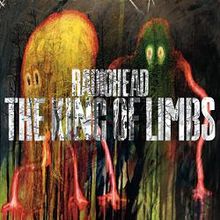
it seems ridiculous for the best rock band on the planet to end up here but then again which Radiohead album doesn’t come with its own overpowering hype? (METACRITIC SCORE 80%)
6. TV on the Radio Nine Types of Light:
not just boring but also, to add insult, the sound of a great band just cruising as way of an obligation. Critics fawned but it’s the type of pre-set fawning that goes as easily as it came. (METACRITIC SCORE 82%)
7. Wild Beasts Smother:
a band that interests me less the more I listen to them. It’s not their ideas--which are exciting enough—but more the execution that seems filtered in a Brit drawl hand down that doesn’t elicit much spontaneity. (METACRITIC SCORE 85%)
8. Drake Take Care:
for Drake to even make this list is astonishing. The first half of Take Care is the trouble but with the astonishing Underground Kings piloting the second half, Drake has found undeniable ground. However, let us not jump shark just yet ok. (METACRITIC SCORE 81%)
9. Fucked Up David Comes to Life:
cool band name aside, a punk rock opera concept is tricky, especially when lyrics are not a highlight. It’s brave but still choppy at best. (METACRITIC SCORE 86%)
10. Kate Bush 50 Words for Snow:
two albums in seventeen years and hardly any rust to show for it. Mama’s a genius alright but her full force lies around the corner and not here. (METACRITIC 87%)
1. Destroyer Kapput:
we all love Dan Bejar but the love doled out to this opus in January seemed a bit too drunk in its own man-love. Savage Night at The Opera is brilliant sure but the other tracks are good but not as life-altering. Maybe it’s the lush horns but once they’ve played part then Bejar doesn’t really use his beautiful voice long enough to place this in the upper echelons of masterpiece level. (METACRITIC SCORE 84%)
2. St. Vincent Strange Mercy:
in a fitting art-imitating-life moment, the cover for Annie Clarke’s latest describes perfectly the mood one can get into while listening to her music: a stifling scream silently going into abeyance. (METACRITIC SCORE 86%)
3. Gillian Welsh The Harrow & The Harvest:
an ok alt-country record but far from the year’s finest. Not because she’s a veteran that gives her a free pass. (METACRITIC SCORE 84%)
4. Tune-Yards whokill:
there are two masterpieces on this sophomore and then some half-fabulous ideas. That said, when the steam runs out of Garbus she still retreats more into sound and not emotional experimentalism. (METACRITIC SCORE 86%)
5. Radiohead The King of Limbs:
it seems ridiculous for the best rock band on the planet to end up here but then again which Radiohead album doesn’t come with its own overpowering hype? (METACRITIC SCORE 80%)
6. TV on the Radio Nine Types of Light:
not just boring but also, to add insult, the sound of a great band just cruising as way of an obligation. Critics fawned but it’s the type of pre-set fawning that goes as easily as it came. (METACRITIC SCORE 82%)
7. Wild Beasts Smother:
a band that interests me less the more I listen to them. It’s not their ideas--which are exciting enough—but more the execution that seems filtered in a Brit drawl hand down that doesn’t elicit much spontaneity. (METACRITIC SCORE 85%)
8. Drake Take Care:
for Drake to even make this list is astonishing. The first half of Take Care is the trouble but with the astonishing Underground Kings piloting the second half, Drake has found undeniable ground. However, let us not jump shark just yet ok. (METACRITIC SCORE 81%)
9. Fucked Up David Comes to Life:
cool band name aside, a punk rock opera concept is tricky, especially when lyrics are not a highlight. It’s brave but still choppy at best. (METACRITIC SCORE 86%)
10. Kate Bush 50 Words for Snow:
two albums in seventeen years and hardly any rust to show for it. Mama’s a genius alright but her full force lies around the corner and not here. (METACRITIC 87%)
Sunday, November 27, 2011
The Twilight Saga: Breaking Dawn—Part I (2011)
The Lady is a Vamp
We’re down to the business end of the Twilight series now and there’s no greater indication of this than Breaking Dawn’s poster. As posters go, the transformation is heavily perceptible, startling. Whereas Bella (Kristen Stewart) has been the shrinking violet before, now she sports sensuality and curves as she leans into beau Edward (Robert Pattinson). Interestingly, the other tangible in this otherworldly threesome, Jacob (Taylor Lautner), is now posed alongside the couple, his animalistic appeal evident even though fully clothed.
If last year’s Eclipse broadened the reality of the sexual tension among the three then this new film deals perpetually—and a bit too stupendously—with its dire consequences. Jacob has resigned himself to the fact that Bella has chosen Edward to be her mate and husband. She however starts to feel jitters as the wedding day arrives. The not-so subtle panic spreads yet it seems no one realizes how deep it is. Thus, the wedding is not the fairytale Bella hoped for but she goes through with it, her face showing the emotional range it lacked before now. Stewart has the requisite nervy-angst mix pat but the writers of Breaking Dawn continue the trend of reinforcing her importance to the plot while limiting her reality greatly.
What it eerily achieves though is capturing a young woman balancing love and lust amid a precarious situation. For all the static that perforates Breaking Dawn, it’s the simple moments that resonate clearest: the glorious long-shot of the camera lens as Edward and Bella stand together or the close-up of their intimacy. This extends to when Jacob finally emerges to wish her well. The moment is softened by Edward’s acceptance of the part he plays in Bella’s life. Whereas the truce is uneasy, it is also necessary. Bella’s face comes alive around Jacob whereas it creases with her husband because in that bond, she is carrying both of them. Their honeymoon to Brazil, where they ‘do it’ for the first time, proves her utter femininity too…the silliness of bidding for time to brush her teeth and shave her legs. This is clearly nerves but, more deeply, is also stubbornness that Bill Condon cannot navigate through or connect a deeper meaning with. This is no surprise as he isn’t known for emotional depth but more a technical gift for portraiture (Dreamgirls, Chicago).
And so Bella toils with her inner struggles over mortality and her real feelings about Jacob in a self-suffering way that drags the film into what feels like a dirge, from half-way throughout. Sadly, it is the latter half that gets most affected, most imbued with ridiculous instances. After their love-making, Bella ends up with bruises and the fastest pregnancy ever on film. The former proves to be interesting fodder but the latter is too absurd to ignore. Or simply too huge because it ends up overshadowing the point where Bella’s maternal instincts begin to empower her, beyond the point of reason.
Breaking Dawn, split into two parts to match trends of other famous film series, thus is caught between stalling for the inevitable outcome and some fad to cling to. The problem is that it meets failure at every turn: Edward’s attempt to kill only sleazy criminals at his initial vampirism comes across clumsy. Bella’s pro-life stance proves a point for exactly the opposite because, like everything here, it lacks real conviction or scope beyond the personal. Even the CGI-wolves talking among themselves at one point prove utterly irritating.
Which, surprisingly, leaves us with the only worthy cause hammered home: family. Bella may not readily see the love surrounding her through real and extended relatives but Jacob does. Breaking Dawn is really his epiphany about the true nature of love and the messiness it can create. Here he becomes willing to take on his own clan just to have Bella’s life spared before her baby can be born. It’s much more too but only now can he articulate it to others, not just to himself, her or Edward. Their world and circumstances are changing and baby (Renesmee) makes four, an unusual number in such an equation. When, in the very last scene, Bella’s bloodshot eyes fly open, he knows things have changed yet again. So too Edward and everyone other supernatural being that populate the town. She’s the new thing around yet, at least for now, she still has time to merely wake up and be just fine.
RATING: 5/10
We’re down to the business end of the Twilight series now and there’s no greater indication of this than Breaking Dawn’s poster. As posters go, the transformation is heavily perceptible, startling. Whereas Bella (Kristen Stewart) has been the shrinking violet before, now she sports sensuality and curves as she leans into beau Edward (Robert Pattinson). Interestingly, the other tangible in this otherworldly threesome, Jacob (Taylor Lautner), is now posed alongside the couple, his animalistic appeal evident even though fully clothed.
If last year’s Eclipse broadened the reality of the sexual tension among the three then this new film deals perpetually—and a bit too stupendously—with its dire consequences. Jacob has resigned himself to the fact that Bella has chosen Edward to be her mate and husband. She however starts to feel jitters as the wedding day arrives. The not-so subtle panic spreads yet it seems no one realizes how deep it is. Thus, the wedding is not the fairytale Bella hoped for but she goes through with it, her face showing the emotional range it lacked before now. Stewart has the requisite nervy-angst mix pat but the writers of Breaking Dawn continue the trend of reinforcing her importance to the plot while limiting her reality greatly.
What it eerily achieves though is capturing a young woman balancing love and lust amid a precarious situation. For all the static that perforates Breaking Dawn, it’s the simple moments that resonate clearest: the glorious long-shot of the camera lens as Edward and Bella stand together or the close-up of their intimacy. This extends to when Jacob finally emerges to wish her well. The moment is softened by Edward’s acceptance of the part he plays in Bella’s life. Whereas the truce is uneasy, it is also necessary. Bella’s face comes alive around Jacob whereas it creases with her husband because in that bond, she is carrying both of them. Their honeymoon to Brazil, where they ‘do it’ for the first time, proves her utter femininity too…the silliness of bidding for time to brush her teeth and shave her legs. This is clearly nerves but, more deeply, is also stubbornness that Bill Condon cannot navigate through or connect a deeper meaning with. This is no surprise as he isn’t known for emotional depth but more a technical gift for portraiture (Dreamgirls, Chicago).
And so Bella toils with her inner struggles over mortality and her real feelings about Jacob in a self-suffering way that drags the film into what feels like a dirge, from half-way throughout. Sadly, it is the latter half that gets most affected, most imbued with ridiculous instances. After their love-making, Bella ends up with bruises and the fastest pregnancy ever on film. The former proves to be interesting fodder but the latter is too absurd to ignore. Or simply too huge because it ends up overshadowing the point where Bella’s maternal instincts begin to empower her, beyond the point of reason.
Breaking Dawn, split into two parts to match trends of other famous film series, thus is caught between stalling for the inevitable outcome and some fad to cling to. The problem is that it meets failure at every turn: Edward’s attempt to kill only sleazy criminals at his initial vampirism comes across clumsy. Bella’s pro-life stance proves a point for exactly the opposite because, like everything here, it lacks real conviction or scope beyond the personal. Even the CGI-wolves talking among themselves at one point prove utterly irritating.
Which, surprisingly, leaves us with the only worthy cause hammered home: family. Bella may not readily see the love surrounding her through real and extended relatives but Jacob does. Breaking Dawn is really his epiphany about the true nature of love and the messiness it can create. Here he becomes willing to take on his own clan just to have Bella’s life spared before her baby can be born. It’s much more too but only now can he articulate it to others, not just to himself, her or Edward. Their world and circumstances are changing and baby (Renesmee) makes four, an unusual number in such an equation. When, in the very last scene, Bella’s bloodshot eyes fly open, he knows things have changed yet again. So too Edward and everyone other supernatural being that populate the town. She’s the new thing around yet, at least for now, she still has time to merely wake up and be just fine.
RATING: 5/10
Sunday, November 20, 2011
Brave New World
Last year, AMC unveiled a six-episode drama about a zombie-attack world that, on the surface, was to achieve one thing only: lure conspiracy theorists and post-apocalyptic world geeks into one big fan-base. Given the plethora of gore-fest films that horror fans have been exposed to of late, the task was more than feasible. Indeed, we’re experiencing such an overload of senseless, dull zombie films at theatres that it achieves the opposite of the intended shock: numbness. Ironically, the best of the current crop hasn’t even hit local theatres or DVD stores much (REC, REC 2, Don’t Let the Right One In) but rather—and there is rancor on my breath to say this—they’ve been adapted instead. Apparently the likes of Spain and Sweden do horror better than North America and with more intricate layers, i.e. more plot, less blood.
Americans though need to see the carcasses on screen being ripped to shreds by the mindless hoard and when death comes then it must be spectacularly in the head. So while the best parts of foreign zombie films get lost in cinematic translation, the guarded skepticism that met this project-- developed by Frank Darabont—was justified. Yet, when the series premiered in October 2010, it was sheer poetry because it easily found a palatable middle-ground. Season I of The Walking Dead has been rightfully lauded as the best thing television had to offer last year, with its no-holds barred look at how surviving humans deal with incomprehensible loss and their own mortality. It was justly rewarded with the Emmy for Best Television Series Drama in January. Like LOST before it, the fascination lies not with the obvious cat and mouse game with death, but with the examination of the survivors themselves. Darabont is no stranger to directing tense psychological thrillers: he did bring adaptations of Stephen King’s The Shawshank Redemption & The Green Mile to theatres and critical acclaim. Here he worked seamlessly with material originated by Robert Kirkman and Tony Moore, which itself was inspired by George A Romero zombie films.
The series revolves around former deputy sheriff Ricky Grimes (Andrew Lincoln) as he guides a small band of survivors, which include his wife and son, towards any hope of life across the zombie-filled landscape. Each new episode brings some new pulsating twist that tests the group’s sense of loyalty to each other. Season II opens with Grimes reflecting with his walkie-talkie on what CDC scientist Edwin Jenner (Noah Emmerich) whispered in his ear before the entire compound was obliterated. The group heads to Fort Benning but get stalled by a barricade of cars on a highway. In a terrific sequence, they hide under vehicles while the zombies swarm past them, not without incident. Both surviving children have been most affected so far: Sophia (Madison Lintz) gets lost in the woods and Carl (Chandler Riggs) gets accidentally shot.
The season so far has built upon its impressive beginning, while embracing newer elements. When Grimes and Daryl (Norman Reedus) dissect a ‘walker’ (name used by the survivors for the zombies) it echoes the forensics on CSI, albeit crudely. There is even a little black humor; the group breaks into a Church only to find four walkers apparently worshipping. Not only do they slaughter them but then turn around and pray to God in the same building. As we’re progressing, the walkers become less of an obvious menace and the personal tumult among the group is taking over. It’s a risky move and one that clearly highlights AMC’s own tumult after firing Darabont. With new writers come newer directions. While the quality of the show has not dipped, there are some stretches that need closing quickly. The disappearance of Sophia is one and the inevitable clash between Ricky and Shane (Jon Bernthal) for alpha-male supremacy and, alas, the woman caught between them, Lori (Sarah Wayne Callies) is another. We’ve only skimmed the surface of this uneasy love triangle but slowly it is building to a bitter end. Lori remains the most fascinating character and Callies plays her with deft touches of sadness, rage and subdued emotion. Indeed, the female characters all seem to be fighting mysterious, tragic pasts. Whereas the men stereotypically now assume a heightened sense of awareness. Here, Darabont’s vision is missed most because we’re in divisional territory of making the storyline utterly original. The character development is multifaceted yet copious…even the walkers are slightly nuanced.
How it will unfurl is anyone’s guess but as The Walking Dead continues to push more moral issues, the characters become more of a collective shell, especially the women. They are indeed, mother, wife, fantasy and target all rolled up into one. Before now they only had the walkers and their children to worry about. Now, however, with rapt tension building, their faces eye the men more wearily and themselves too. RATING: 8/10
Last year, AMC unveiled a six-episode drama about a zombie-attack world that, on the surface, was to achieve one thing only: lure conspiracy theorists and post-apocalyptic world geeks into one big fan-base. Given the plethora of gore-fest films that horror fans have been exposed to of late, the task was more than feasible. Indeed, we’re experiencing such an overload of senseless, dull zombie films at theatres that it achieves the opposite of the intended shock: numbness. Ironically, the best of the current crop hasn’t even hit local theatres or DVD stores much (REC, REC 2, Don’t Let the Right One In) but rather—and there is rancor on my breath to say this—they’ve been adapted instead. Apparently the likes of Spain and Sweden do horror better than North America and with more intricate layers, i.e. more plot, less blood.
Americans though need to see the carcasses on screen being ripped to shreds by the mindless hoard and when death comes then it must be spectacularly in the head. So while the best parts of foreign zombie films get lost in cinematic translation, the guarded skepticism that met this project-- developed by Frank Darabont—was justified. Yet, when the series premiered in October 2010, it was sheer poetry because it easily found a palatable middle-ground. Season I of The Walking Dead has been rightfully lauded as the best thing television had to offer last year, with its no-holds barred look at how surviving humans deal with incomprehensible loss and their own mortality. It was justly rewarded with the Emmy for Best Television Series Drama in January. Like LOST before it, the fascination lies not with the obvious cat and mouse game with death, but with the examination of the survivors themselves. Darabont is no stranger to directing tense psychological thrillers: he did bring adaptations of Stephen King’s The Shawshank Redemption & The Green Mile to theatres and critical acclaim. Here he worked seamlessly with material originated by Robert Kirkman and Tony Moore, which itself was inspired by George A Romero zombie films.
The series revolves around former deputy sheriff Ricky Grimes (Andrew Lincoln) as he guides a small band of survivors, which include his wife and son, towards any hope of life across the zombie-filled landscape. Each new episode brings some new pulsating twist that tests the group’s sense of loyalty to each other. Season II opens with Grimes reflecting with his walkie-talkie on what CDC scientist Edwin Jenner (Noah Emmerich) whispered in his ear before the entire compound was obliterated. The group heads to Fort Benning but get stalled by a barricade of cars on a highway. In a terrific sequence, they hide under vehicles while the zombies swarm past them, not without incident. Both surviving children have been most affected so far: Sophia (Madison Lintz) gets lost in the woods and Carl (Chandler Riggs) gets accidentally shot.
The season so far has built upon its impressive beginning, while embracing newer elements. When Grimes and Daryl (Norman Reedus) dissect a ‘walker’ (name used by the survivors for the zombies) it echoes the forensics on CSI, albeit crudely. There is even a little black humor; the group breaks into a Church only to find four walkers apparently worshipping. Not only do they slaughter them but then turn around and pray to God in the same building. As we’re progressing, the walkers become less of an obvious menace and the personal tumult among the group is taking over. It’s a risky move and one that clearly highlights AMC’s own tumult after firing Darabont. With new writers come newer directions. While the quality of the show has not dipped, there are some stretches that need closing quickly. The disappearance of Sophia is one and the inevitable clash between Ricky and Shane (Jon Bernthal) for alpha-male supremacy and, alas, the woman caught between them, Lori (Sarah Wayne Callies) is another. We’ve only skimmed the surface of this uneasy love triangle but slowly it is building to a bitter end. Lori remains the most fascinating character and Callies plays her with deft touches of sadness, rage and subdued emotion. Indeed, the female characters all seem to be fighting mysterious, tragic pasts. Whereas the men stereotypically now assume a heightened sense of awareness. Here, Darabont’s vision is missed most because we’re in divisional territory of making the storyline utterly original. The character development is multifaceted yet copious…even the walkers are slightly nuanced.
How it will unfurl is anyone’s guess but as The Walking Dead continues to push more moral issues, the characters become more of a collective shell, especially the women. They are indeed, mother, wife, fantasy and target all rolled up into one. Before now they only had the walkers and their children to worry about. Now, however, with rapt tension building, their faces eye the men more wearily and themselves too. RATING: 8/10
Monday, October 24, 2011
Biophilia (Bjork) (2011)
App(ly) World
There are two types of people in the world: those who knew who Steve Jobs was and those who did not. How the latter group can actually still exist puzzles me but they do and, as frightening as that is, it remains ironic that they’re the ones who clamor for his iconic products the most without even realizing it. For, what would be the tech world be without the Mac (Apple, not BK, kids) and the iPad, both portable devices that have revolutionized our involvement with the internet and music. The genius of Jobs was not only the equity he invested in invention and implementation but also that he understood greatly the personal, almost fanatic relationship between the user and product in contemporary times.
As we’ve progressed into the twenty-first century, that fanaticism has extended towards the very art we consume as well as to the innovators that produce it. In the field of music, no solo artist trends on of this wave longer or more consistently than Bjork, the Icelandic singer who has blazed an almost Jobs-like path these last eighteen years, with stunning music videos and gorgeous concept albums. It’s been an impressive streak, one that has dragged electronica and Brit pop out of near obscurity (Post, Homogenic) into a splendored thing and positioned her as the leading exponent of both genres. More recently though, in the second half of her career, she’s embarked upon defining love as the central form of expression(Vespertine, Medulla) to coincide with the personal decisions of her life. While lauded initially, this phase has come under the microscope ever since Volta (2007) failed to find resonance with most of her fans.
Bjork is nothing if not persistent however and the stubborn genius that resides within her feels that her extremity will win all over eventually. So, though to the average music fan she’s the crazy exotic who wore the infamous swan dress to the 2001 Oscars, she’s made plans for them. She’s also aware that critics have helped herald the rise of a certain Sri Lankan-born pop terrorist to usurp her as the leading pop brand but she’s seen these insurrections before. She also knows that we’ve been wondering just how deeply her partner Matthew Barney has influenced her art direction.
So here we are with Biophilia, her long overdue eight solo album. It’s more than just a studio album however but a multi-media release that tackles the visual as well as the technological aspect of her music. Here the Jobs comparison becomes apt because all of the album’s ten tracks were partly recorded on an iPad, with accompanying apps to be downloaded to enhance her vision. Apple has even shrewdly thrown in a game and allows the listener to remix parts of the songs for themselves and hear concert footage as well. It’s a heavy-loaded project but one that feel like a natural progression for Bjork. The past ten years have seen her moving away from singing about technology to incorporating it heavily into her world. The range here runs from the use of a gameleste – a fusion of gamelan and celeste—to electronic pyrotechnics pummeled out on a laptop.
All this info fascinates but listening to the songs sans the apps, the vision of Bjork remains clear in weaving her own interpretation of the microcosms that guide the natural flow of our universe. This includes her own rejuvenation, heard clearly on opener Moon, a glorious offering that teems energetically with its ‘all birthed and happy’ mantra. Thunderbolt bridges the gap between her worlds, with its heavy orchestrated flow giving way to her vocals and video game-like synths. It’s a welcome concession from her that though we’re deep within her folds, Bjork must not lose us as she did on Volta. You hear it in the way Crystalline smoothly blends its burgeoning hip/hop beats with her soaring growls while Hollow’s theatrical groundswell tilts just at the right emotional level. The rest of the album breaks on either side of these two song concepts, some with better results while others maintain a restrained pace. All however slow their tempos as if to have her remain in an exquisite time warp of primeval sounds and rhythms.
It’s far from her peerless days (Homogenic,1997) but if her last opus fell prey to its own intricate design, then Biophilia is the spiritual re-emergence from all that indulgence. Or maybe it’s a widening of the chasm but with upgrades added that allows the listener to choose the accessible parts for themselves. Irrespective of our participation though Bjork continues to sew together a patchwork of her most personal ambition as well as to expose the inner working of her fecund mind. It has reaped much joy before—the huge emotional crest washing ashore on Pagan Poetry, the love letter being written with heart-breaking gestures on Hidden Place, both tracks from Vespertine. It will continue here as well but the album is at times inaccessible for attracting new listeners but the old faithful will find it utterly compelling and rich, especially with repeated listens. It won’t matter much now the advanced technology involved but it is heartening to know that this heralded first ever app-album is indeed the watershed moment in popular music that we’ve felt it would be. Time will tell if this whole new world that she’s spent three years creating will yield even greater results or if there’s a third act (or app) in the making. We expect nothing less from her because that’s the very high stakes by which this woman’s inimitable career has always been marked. For now, she’s forged ahead of the pack yet again, daring everyone else to step up their game. Your move again, M.I.A.
RATING: 8/10
There are two types of people in the world: those who knew who Steve Jobs was and those who did not. How the latter group can actually still exist puzzles me but they do and, as frightening as that is, it remains ironic that they’re the ones who clamor for his iconic products the most without even realizing it. For, what would be the tech world be without the Mac (Apple, not BK, kids) and the iPad, both portable devices that have revolutionized our involvement with the internet and music. The genius of Jobs was not only the equity he invested in invention and implementation but also that he understood greatly the personal, almost fanatic relationship between the user and product in contemporary times.
As we’ve progressed into the twenty-first century, that fanaticism has extended towards the very art we consume as well as to the innovators that produce it. In the field of music, no solo artist trends on of this wave longer or more consistently than Bjork, the Icelandic singer who has blazed an almost Jobs-like path these last eighteen years, with stunning music videos and gorgeous concept albums. It’s been an impressive streak, one that has dragged electronica and Brit pop out of near obscurity (Post, Homogenic) into a splendored thing and positioned her as the leading exponent of both genres. More recently though, in the second half of her career, she’s embarked upon defining love as the central form of expression(Vespertine, Medulla) to coincide with the personal decisions of her life. While lauded initially, this phase has come under the microscope ever since Volta (2007) failed to find resonance with most of her fans.
Bjork is nothing if not persistent however and the stubborn genius that resides within her feels that her extremity will win all over eventually. So, though to the average music fan she’s the crazy exotic who wore the infamous swan dress to the 2001 Oscars, she’s made plans for them. She’s also aware that critics have helped herald the rise of a certain Sri Lankan-born pop terrorist to usurp her as the leading pop brand but she’s seen these insurrections before. She also knows that we’ve been wondering just how deeply her partner Matthew Barney has influenced her art direction.
So here we are with Biophilia, her long overdue eight solo album. It’s more than just a studio album however but a multi-media release that tackles the visual as well as the technological aspect of her music. Here the Jobs comparison becomes apt because all of the album’s ten tracks were partly recorded on an iPad, with accompanying apps to be downloaded to enhance her vision. Apple has even shrewdly thrown in a game and allows the listener to remix parts of the songs for themselves and hear concert footage as well. It’s a heavy-loaded project but one that feel like a natural progression for Bjork. The past ten years have seen her moving away from singing about technology to incorporating it heavily into her world. The range here runs from the use of a gameleste – a fusion of gamelan and celeste—to electronic pyrotechnics pummeled out on a laptop.
All this info fascinates but listening to the songs sans the apps, the vision of Bjork remains clear in weaving her own interpretation of the microcosms that guide the natural flow of our universe. This includes her own rejuvenation, heard clearly on opener Moon, a glorious offering that teems energetically with its ‘all birthed and happy’ mantra. Thunderbolt bridges the gap between her worlds, with its heavy orchestrated flow giving way to her vocals and video game-like synths. It’s a welcome concession from her that though we’re deep within her folds, Bjork must not lose us as she did on Volta. You hear it in the way Crystalline smoothly blends its burgeoning hip/hop beats with her soaring growls while Hollow’s theatrical groundswell tilts just at the right emotional level. The rest of the album breaks on either side of these two song concepts, some with better results while others maintain a restrained pace. All however slow their tempos as if to have her remain in an exquisite time warp of primeval sounds and rhythms.
It’s far from her peerless days (Homogenic,1997) but if her last opus fell prey to its own intricate design, then Biophilia is the spiritual re-emergence from all that indulgence. Or maybe it’s a widening of the chasm but with upgrades added that allows the listener to choose the accessible parts for themselves. Irrespective of our participation though Bjork continues to sew together a patchwork of her most personal ambition as well as to expose the inner working of her fecund mind. It has reaped much joy before—the huge emotional crest washing ashore on Pagan Poetry, the love letter being written with heart-breaking gestures on Hidden Place, both tracks from Vespertine. It will continue here as well but the album is at times inaccessible for attracting new listeners but the old faithful will find it utterly compelling and rich, especially with repeated listens. It won’t matter much now the advanced technology involved but it is heartening to know that this heralded first ever app-album is indeed the watershed moment in popular music that we’ve felt it would be. Time will tell if this whole new world that she’s spent three years creating will yield even greater results or if there’s a third act (or app) in the making. We expect nothing less from her because that’s the very high stakes by which this woman’s inimitable career has always been marked. For now, she’s forged ahead of the pack yet again, daring everyone else to step up their game. Your move again, M.I.A.
RATING: 8/10
Tuesday, October 4, 2011
Coastal Grooves (Blood Orange) (2011)
Club Imitation
‘maybe she’s just pieces of me/ you’ve never seen…’ (Tori Amos, ‘Tear in Your Hand’)
When last we left him, Devonte Hynes was busy releasing a sophomore album for his more famous moniker, Lightspeed Champion (Life is Sweet, Nice to Meet You, 2010). In my review, I noted Hynes’ relentlessness as well as his innate genius of mixing pop and rock vis-Ã -vis his slavish love of pure forms keeping him in one skin too often. The talented twenty-five year old hails from Britain but has been so formalized in the mid West that you’d be excused for mistaking him as American. His debut album (Falling off the Lavender Bridge) was a solid introduction to his aesthetic, which is quickly catching on: he’s been writing a lot recently for Solange Knowles (Beyonce’s sister) and Florence and The Machine.
A year later and he has reinvented into something totally new. So new and mysterious that I’m not sure how to describe Blood Orange other than to say that Hynes has finally gotten that complimentary swagger he desperately needed. Or, maybe just gotten in touch with his depressed, feminine side. Like all compulsive-driven musicians, he’s tossing off ideas that others can only dream of inventing. Coastal Grooves is interestingly configured because its evidence of his own growth as an artist receptive to openness.
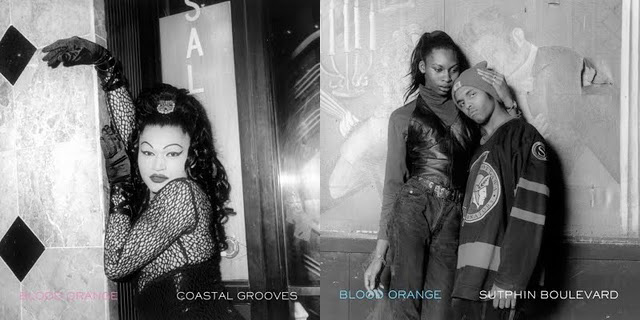
The immediacy of the guitar work coalescing with electronic beats on the opener, Forget It shows that Hynes has been hard at work. It’s a simple song, most notable for one line (‘I am not your savior baby girl’) sung many times over but its sheer minimalism is pleasing. Instantly Blank inserts gorgeous aside vocals that nearly steal the show. Hynes has stated that his reference for the album were basically drag queens of the very distant past and the cover shot for the album is indicative of this. He has stated also though that it was not meant to be a personal perspective from him on the issue that would arise and that’s where he runs into a few problems. All art is viewed through specific lenses and the author cannot extract himself from the written or sung word so Coastal Grooves is a definite balancing act.
Things are most balanced when Hynes rips away the self-efficacious masks his characters wear: the bluesy solution fronting Champagne Coast, the stark propulsion facing the doomed girl in Can We Go Inside Now? Or when he’s channeling transgender influences in an attempt to tie sound and sexuality together. A sense of sadness perforates the album as well but this can be tricky and he either hits or misses with the ten tracks, depending on the mood that’s set. It doesn’t help that his dissection of pop as Blood Orange doesn’t loosen up the techno and dance beats as expected. He instead uses a lot of dubs and minimalism, which work to an extent but doesn’t provide transcendence. Nor is there much wry humor either—something he’s provided in spades as Lightspeed Champion. More results like Madame Van Damme and Galaxy of the Lost would’ve done this project a hell of a lot good.
Coastal Grooves doesn’t exactly push through its intended denizens or reveal the hidden: Hynes tries hard to replicate the queer night-life but ends up with something that sounds more like the cool, straight guy’s perspective instead. The overlapping jazzy texture that dominates the record is his stamp but there’s little connection to the source material in its actualized form. Coastal Grooves is a highly romanticized look at multi-dimensional personalities to be sure but it’s just not them telling these tales. It’s fascinating in parts but that’s because Hynes is the type of nerdy genius that enthralls…which leads to another issue. You’ll listen to this project and end up forgetting everything else except his silky voice and solid grooves. The artistry involved though is too medicinal because he’s taken the excitable and loquacious and simply cleansed them with sterile normality. It’s a little lost on him that people go to clubs to enjoy a bit of escapism…to become something temporarily that they cannot be during the day. To experience the excitement of strangers, to flirt unashamedly or to merely unwind with the besties and bitch about work.
Yes, Hynes does well to accompany his subjects into their world but he’s nailed them to a wall of intense scrutiny without as much as any of the aforementioned joys or even a Cosmopolitan to sip on while waiting for last call. This wide-eyed Q&A wearies after a while because, seriously, who wants to focus on their problems while their having fun? Hynes seems to think otherwise and I’m guessing from now on they’ll only have him tag along because he’s the designated driver.
RATING: 7.5/10
‘maybe she’s just pieces of me/ you’ve never seen…’ (Tori Amos, ‘Tear in Your Hand’)
When last we left him, Devonte Hynes was busy releasing a sophomore album for his more famous moniker, Lightspeed Champion (Life is Sweet, Nice to Meet You, 2010). In my review, I noted Hynes’ relentlessness as well as his innate genius of mixing pop and rock vis-Ã -vis his slavish love of pure forms keeping him in one skin too often. The talented twenty-five year old hails from Britain but has been so formalized in the mid West that you’d be excused for mistaking him as American. His debut album (Falling off the Lavender Bridge) was a solid introduction to his aesthetic, which is quickly catching on: he’s been writing a lot recently for Solange Knowles (Beyonce’s sister) and Florence and The Machine.
A year later and he has reinvented into something totally new. So new and mysterious that I’m not sure how to describe Blood Orange other than to say that Hynes has finally gotten that complimentary swagger he desperately needed. Or, maybe just gotten in touch with his depressed, feminine side. Like all compulsive-driven musicians, he’s tossing off ideas that others can only dream of inventing. Coastal Grooves is interestingly configured because its evidence of his own growth as an artist receptive to openness.
The immediacy of the guitar work coalescing with electronic beats on the opener, Forget It shows that Hynes has been hard at work. It’s a simple song, most notable for one line (‘I am not your savior baby girl’) sung many times over but its sheer minimalism is pleasing. Instantly Blank inserts gorgeous aside vocals that nearly steal the show. Hynes has stated that his reference for the album were basically drag queens of the very distant past and the cover shot for the album is indicative of this. He has stated also though that it was not meant to be a personal perspective from him on the issue that would arise and that’s where he runs into a few problems. All art is viewed through specific lenses and the author cannot extract himself from the written or sung word so Coastal Grooves is a definite balancing act.
Things are most balanced when Hynes rips away the self-efficacious masks his characters wear: the bluesy solution fronting Champagne Coast, the stark propulsion facing the doomed girl in Can We Go Inside Now? Or when he’s channeling transgender influences in an attempt to tie sound and sexuality together. A sense of sadness perforates the album as well but this can be tricky and he either hits or misses with the ten tracks, depending on the mood that’s set. It doesn’t help that his dissection of pop as Blood Orange doesn’t loosen up the techno and dance beats as expected. He instead uses a lot of dubs and minimalism, which work to an extent but doesn’t provide transcendence. Nor is there much wry humor either—something he’s provided in spades as Lightspeed Champion. More results like Madame Van Damme and Galaxy of the Lost would’ve done this project a hell of a lot good.
Coastal Grooves doesn’t exactly push through its intended denizens or reveal the hidden: Hynes tries hard to replicate the queer night-life but ends up with something that sounds more like the cool, straight guy’s perspective instead. The overlapping jazzy texture that dominates the record is his stamp but there’s little connection to the source material in its actualized form. Coastal Grooves is a highly romanticized look at multi-dimensional personalities to be sure but it’s just not them telling these tales. It’s fascinating in parts but that’s because Hynes is the type of nerdy genius that enthralls…which leads to another issue. You’ll listen to this project and end up forgetting everything else except his silky voice and solid grooves. The artistry involved though is too medicinal because he’s taken the excitable and loquacious and simply cleansed them with sterile normality. It’s a little lost on him that people go to clubs to enjoy a bit of escapism…to become something temporarily that they cannot be during the day. To experience the excitement of strangers, to flirt unashamedly or to merely unwind with the besties and bitch about work.
Yes, Hynes does well to accompany his subjects into their world but he’s nailed them to a wall of intense scrutiny without as much as any of the aforementioned joys or even a Cosmopolitan to sip on while waiting for last call. This wide-eyed Q&A wearies after a while because, seriously, who wants to focus on their problems while their having fun? Hynes seems to think otherwise and I’m guessing from now on they’ll only have him tag along because he’s the designated driver.
RATING: 7.5/10
Subscribe to:
Posts (Atom)