Sunday, December 2, 2012

2012: The Top 10 Worst Films (that I saw)


Bad films are a part of our lives—its best to just acknowledge that and move on. This list is far from concrete because like any self-respecting critic, I do not watch bad films on purpose. So, after I reached a certain quota then I stopped watching. Surely there are worst films released subsequently but I never set eyes on them. Here’s the unfortunate viewing experiences of 2012:


1. The Dictator (directed by Larry Charles):

Sacha Baron Cohen’s search for satire in a post Borat world has been downright ridiculous and this is his ultimate worst attempt at relevance until, well, perhaps whatever he’s planning next. (METACRITIC SCORE: 5.8/10)


2. Snow White & The Huntsman (directed by Rupert Sanders):

the film’s body politic surrounding the queen and Snow White remains strange even up to its dull conclusion. The director, Rupert Sanders (in his debut) is not concerned with transcendence but more so that you get the generic point of how life-sapping the queen is…as if somehow you’re in danger of ever forgetting it. Snow White and the Huntsman never looks back to see how Ravenna gets to be the monster that she becomes, just a brief glimpse on the effect of her own mother’s words and charms upon her.
(METACRITIC SCORE: 5.7/10)


3. Gone (directed by Heitor Dhalia):

where, once again, with incredibly cheesy writing, Amanda Seyfried is the undeniable weakest link in a film where she was the star. (METACRITIC SCORE: 3.6/10)


4. Silent Hill: Revelation 3D (directed by Michael J. Bassett):

even in 3D this is by far the worst attempt at horror this year. The premise is now worn out and with the cult defeated, please no more Alessa! (METACRITIC SCORE: 1.5/10)


5. Ted (directed by Seth McFarlane):

a massive hit and one I looked forward too but by the time Ted uttered the first words, I knew I’d end up hating it. What could have been a tale of co-dependency turns out into a corny, horny romp through adult life. Ugh, lets hope McFarlane doesn’t pull too many references of it at next year’s Oscars. (METACRITIC SCORE: 6.2/10)


6. Ghost Rider: Spirit of Vengeance (directed by Brian Taylor & Mark Neveldine):

it wouldn’t be an annual worst film list without Nicholas Cage… (METACRITIC SCORE: 3.2/10)


7. One For the Money (directed by Julie Anne Robinson):

Katherine Heigl plays a sorta cop tracking down a former lover whom she may very well be in love with still. The ensuing triteness is enough to make one weep from boredom. (METACRITIC SCORE: 2.2/10)


8. Dark Tide (directed by John Stockwell):

the trailer for Dark Tide is pretty good at deceiving one with what’s going on. One expects some gripping sea saga but what the trailer can’t hide is Halle Berry. Yet again, Berry has found herself in a schizophrenic film with choppy, cheap action and her own questionable acting doesn’t help much. The film, on another note, hasn’t even made half a million at the box office despite being made for $25 million. (METACRITIC SCORE: 2.3/10)


9. The Possession (directed by Ole Bornedal):

Sam Raimi has been involved with exceptionally cheesy and bad horror films for a while now so when I saw that he was the producer of this, expectations were low. The film, based on a real-life event, follows a family dealing to reclaim the soul of the daughter after she accidentally opens a dybbuk box. The spirit gets out, makes mischief and blah blah blah. (METACRITIC SCORE: 4.5/10)


10. Alex Cross (directed by Rob Cohen):

Tyler Perry may be a heavyweight behind the camera for the average movie-goer but even that target audience didn’t like this much. The film has run into a $10 million deficit at the box office and after a few minutes its easy to see why. Perry is so bad as an actor that half-way through—while I was still waiting for anything to happen—I started to pine for Madea. Let us just hope they recast the character for the next film. (METACRITIC SCORE: 3/10)

Saturday, December 1, 2012

2012: The Top 10 Most Overrated Albums


Every year albums get released that critics coalesce around that, quite frankly, puzzle me no matter how often I listen to them, such high praise can be retroactive or in good faith, but rarely on an album’s actual merit. Here are the ten most such regarded LPs this year. Overrated in my opinion isn’t necessarily bad but more just not warranted the universal praise something gets. A lot of these albums were considered for my best LPs list but the reality of better albums made that impossible. Here goes:


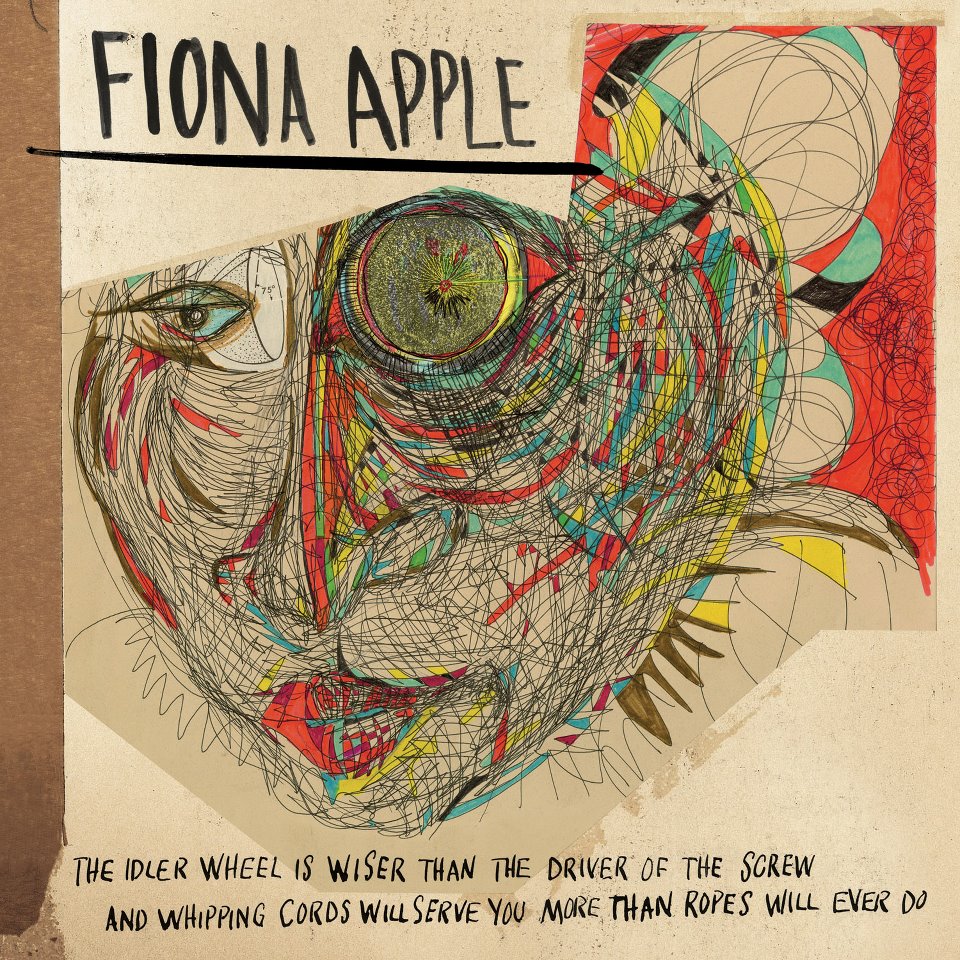
1.Fiona Apple The Idler Wheel…:


it’s great to have Fiona back after a seven year hiatus but this is hardly in line with the fiery stuff that we’ve come to love throughout the years. It’s an accomplished LP but Fiona has failed for once to find the balance between drunken insight and solemnity. The Idler Wheel sounds like the demo of some personal project that was awaiting its doll parts to become more complete. (METACRITIC SCORE: 8.9/10)


2.Swans The Seer:


first, how adorable is that cover shot of a baby wolf with human teeth. That aside though, the reception of The Seer indicates some post-world revelation when all one hears is either sheer melody or spoken word. Or breathing and repeated lyrics. I like epic recording like everyone else but at some point the songs on a LP have to be actual songs. That’s what The Seer plainly lacks far too often over its 2 hour run time. (METACRITIC SCORE: 8.7/10)


3.Leonard Cohen Old Ideas:


I get that as a legend one basically is given a free pass (Neil Young and Bob Dylan frequently benefit from this, to be fair) but Cohen sounds as if he fell asleep at points on this LP while being revived to growl the rest. This sounds like one of those audio book projects instead of music. (METACRITIC SCORE: 8.5/10)


4.Godspeed You! Black Emperor Allelujah! Don’t Bend! Ascend!:


this band has always been able to do the exact same thing on every record and get the biggest critical scores possible. They must be bored with all this excellence by now because critics aren’t even challenging them to include lyrics. (METACRITIC SCORE: 8.4/10)


5.Beach House Bloom:


when Popmatters gave Bloom its highest rating of the year the stage was set for all other publications to follow suit. Indeed, the hype surrounding the album began from late 2011. Its indicative then that most lists have not awarded it top ten status after all the time for repeated listens has set in. This band is a good one-trick pony but still, a one-trick pony. (METACRITIC SCORE: 7.8/10)


6.Andy Stott Luxury Problems:


impeccable production but nothing’s actually inside this huge wrap of bubbles. (METACRITIC SCORE: 8.5/10)


7.Flying Lotus Until The Quiet Comes:


I’m not big on tracks without much actual lyrics and this is why perhaps why I’m not frothing at the mouth like most critics over Flying Lotus. I love the synergy between jazz and electronic music but this is album number four by him…time to cough up some words bro. (METACRITIC SCORE: 8.5/10)


8.Cloud Nothings Attack On Memory:


Dylan Baldi’s vocals eventually wear off the novelty during the course of these eight grunge-meets-hardcore tracks. (METACRITIC SCORE: 8.3/10)


9.Jack White Blunderbuss:


White, one half of The White Stripes, was one of the most important artists of the last decade by any conceivable standard but here on his long overdue solo debut he seems more content for a trial run than a full out attack on our senses. (METACRITIC SCORE: 8.3/10)


10.Bat For Lashes The Haunted Man:


Natasha Khan’s third LP has some decent moments but she’s forgetting that it’s the up tempo beats that made her interesting in the first place.. (METACRITIC SCORE: 7.8/10)

Monday, November 19, 2012

Scandal: Season 2 (ABC, Thursdays 9 pm)


Winning Women


One of the many problems with Season One of Scandal was the constant reminder of the awesomeness of Olivia Pope (Kerry Washington). Even before we were formally introduced to her, her henchman Harrison (Columbus Short) was working overtime to convince Quinn (Katie Lowes) and us of her many legendary feats. When Pope finally emerged on screen in a smart white coat—flashing multiple languages at us briefly—she demanded everyone to take the deals she designed for them, no questions asked. In one instance she handed over the Russian ambassador’s kidnapped baby to him, sternly warned him to not mention it to the FBI because they’re “tired of me”. In another, she gave a young decorated war hero the “it gets better” speech…all this in the first episode of the series.

Olivia Pope fatigue thus set in early with Scandal (that and her ludicrous, “my gut tells me all I need to know”) but there’s more: Olivia runs a crisis-management team (Pope & Associates) and before that she worked in the White House as its Communications Director. She’s black, pretty, slim, wealthy and—the icing of it all—is the beloved of the US President. Even in modern-day America this is quite the stretch and the first five episodes of the series buckled under the weight of all this fabulousness. The show’s creator, Shonda Rhimes (Grey’s Anatomy)-- sensing the piling improbabilities no doubt—has had to scale back and retooled Pope more as a vulnerable, strong archetype and not some cold, stony deity in order to even get to this season.

It has started to pay off because Rhimes had to raise the stakes for the other women in the show as well. Not only is this plausible but it adds tension and allows for personal, emerging storylines. Moving beyond an all-knowing Olivia is one thing but it’ll be another thing to establish terra firma on the remarkable set of complicated women around her. This is then, the great promise Season Two strives to deliver: Olivia and her contemporaries all wanting to win and have everything at any cost.
So far, those many wins have collectively been against the opposite sex but three episodes into this new season, it is clear that some vicious girl-on-girl action will go down soon. Olivia may be used to grilling individuals over their questionable actions but now she’s the one being scrutinized. Her unquestioned grip on things is endangered not only at her firm by the judgmental Abby (Darby Stanchfield) but also—and more direly—the wife of the president, Mellie (Bellamy Young). The show has placed many objects between Olivia and Mellie’s inevitable showdown but it helps that the show’s writing no longer pits its action against what it feels we the viewer must be thinking in our heads while we watch. Now, Rhimes allows us to connect the dots and anticipate what is to come at a pace that doesn’t feel artificial.

While we wait patiently, Scandal has scaled down on inconsequential outer case loads to focus on complicated, inner ones. Abby’s obsession with Pope as a brand vis-à-vis the individual may be moving glacially but hints at some luscious drama. Quinn’s secret identity, less interesting, gets the lion-share for now but it’s a big gamble especially as how Pope seems to be in on it from the start.

This, in a very real way, makes Olivia the least interesting character on the show…well, next to Quinn anyway. Season 2 hasn’t put forth any new angle to contradict this and that remains the sticking point of Scandal: how, utterly un-scandalous its lead character is. Nothing screams unique or controversial just generic achievement, the type that excels in the blue-collar world. Even the main male lead, the president Fitz (Tony Goldwyn) is largely unremarkable. What keeps both going though is when they’re together the chemistry is obvious and charming to watch. Pope in isolation is singular but when cast within the context of her cases, her story begins to unthaw. “The Other Woman” (episode two) particularly hit home when we witnessed two ‘other women’ story-lines unfold in one.

At one point in this intriguing episode, Olivia comes face to face with Mellie, unguarded and with no one else in the way. It is a terrifying moment for both but the extent to which Mellie perfectly navigates it is the real terror. For all the awesomeness we’ve been instructed to have for Olivia from the start of Scandal, in these three seconds, we feel true pity for her and the hopeless situation she’s in. If you’re as much a political junkie as I am then don’t be surprised if Condoleezza Rice filters in and out of your sub-consciousness at precisely this moment.

RATING: 6/10

Sunday, October 21, 2012

Centipede Hz (Animal Collective) (2012)


Bees in the Trap


It’s hard to believe that three years have passed since Animal Collective dragged the freak/folk movement into the public sphere with their masterful Merriweather Post Pavillion. Yet, here we are all nervously twiddling with Centipede Hz, the band’s ninth studio release, trying hard not to compare it to its immediate predecessor.

So, let’s get the obvious out of the way: Centipede Hz isn’t as overwhelming or as great as Merriweather Post Pavillion but to dismiss it as some drug-induced experiment would be at one’s own peril. I suspect most indie critics would agree with me that in an ideal world the guys would have issued it as the opus before Strawberry Jam (2007) but the muse that moves Avey Tare and Panda Bear had other ideas. Fans can breathe easy though: for the fourth straight time, they’ve redefined musical possibilities and produced a genuine AOTY contender. Not that you could tell from the cool reception that has greeted it.

Which, when shown in contrast to the hysteria that greeted Merriweather Post Pavillion, misleads one to think that the band has cooled off. Nothing could be further from the truth but Animal Collective has already achieved that rarefied air only few musicians ever reach in their careers: that point where everything is sacrosanct and you’re making up the rules as you go along. The last bands to reach this level of irreverence were Radiohead and Outkast—both with immense stretches of genius—yet neither were pulling a new genre along its way.

Animal Collective is a freak/folk curiosity that, thanks to indie blogs, managed to spread and pupate into this pop/rock hybrid that their songs resemble today. If you go back as far as Here Comes the Indian (2003), the first LP they did to bear their name, you’d swear it’s a different band. They’ve done this gradually, not selling out their roots for a beach blonde sound, while adding a few condiments.

The trademark water-logged sounds and shake and bake rhythms are still present but Tare sounds positively on acid most of the time: both Moonjock and Today’s Supernatural explode with a lush pop of repetitive sound, reminiscent of Peacebone, the opening track on Strawberry Jam. Today’s Supernatural is the more ambitious track, with its belligerent mid-section and the primal howl only Tare can pull off (‘sometimes you gotta get mad!’) without being accused of trying too hard. Whereas Moonjock eventually entangles itself into sonic messiness, Supernatural remains compelling throughout, a testament to Tare’s craft. The Ariel Pink-ish Rosie Oh takes things in a different direction—a beehive of odd sounds verging upon each other into a sublime display of innovation.

The album slips into familiar skin thereafter; delivering major hooks (Applesauce, Father Time) or spiel that avoids hooks altogether (Wide Eyed, the return of band member Deakin). These are the first six tracks on the album, enough variation to polarize casual and die-hard fans but it is at that point that the economics of the band rises to the challenge. For, if it seemed Centipede Hz lacked the sonic depth of its predecessors, then that’s corrected immediately. New Town Burnout reaches out to the fan-base that goes gaga for Panda Bear’s solo releases. Monkey Riches drops guitars and a wailing Tare…a combination that always wins. No electronic odes to their families or teenage lives here, just sonic explorations of a current state of mind.

And who hasn’t wanted to peer inside the mind of Tare especially, the unofficial leader of the group. Who isn’t curious to ponder if he sometimes looks at Panda and thinks, “I should have the solo praise that you do.” If Merriweather Post Pavillion neatly answered so many questions the guys had asked themselves throughout the years, this LP leaves many more untouched. It has wonderful dialogue but it pulls up short at times before surrendering to its passage of time.

Maybe the real issue with Centipede Hz is the uncertainty of what it represents for the band and fans alike. The first half sounds like a real team effort while the latter half sounds like Avey and Panda constructed separate mini EPs without any consultation from the other. The sad thing is that those are the songs that hold the collective vision of the band best. You don’t need to be a critic to realize what this subtext means, or where it is, alas, most likely to lead to. You’ll be thinking on that while you hear the poignancy of the closing trio (Mercury Man, Pulley & the stunning Amanita). All three tracks stand among the very best Animal Collective has done in their long and great career. I can’t believe I’m saying this in print so soon after their apex but it’d be a real pity if they become the last three tracks of their immense journey.

RATING: 8/10

Sunday, October 7, 2012

Pariah (2011)


Choosing, not Running


Though it premiered at the 2011 Sundance Film Festival to high praise, most film goers would have only heard about Pariah through an unlikely source much later on: Meryl Streep. In what is becoming a colorful tradition, the great actress continues to highlight exceptional performances and good films in her acceptance speeches. Sure enough then as she lectured to us from the Golden Globe podium trip this year, she let slip the name of Adepero Oduye and Pariah.

Released officially after Christmas last year, Pariah is the tale of Alike (Oduye), a seventeen year-old who must come to terms with her burgeoning lesbianism. Set in Brooklyn, the film tackles the multi-faceted issue with complex characters and a social standard that seems unbending and reserved. Skillfully directed by newcomer Dee Rees, Pariah is every black parent’s nightmare when the obvious becomes, well, more obvious.

That sense of obviousness greets us immediately as we witness Alike (pronounced ah-lee-kay) and her BFF Laura (Pernell Walker) in a strip club checking girls out. Laura is a popular butch (the lesbian term/equivalent for thug) but has a genuine friendship with Alike. She looks out for her because she knows the struggles to map out an identity. Alike, like most neophytes, thinks she is unique in her self-discovery and issues, so she juggles her fears and boldness in giant-sized and baby steps respectively. She has already realized though that to experience her gay self, she must have separate identities. So, after the club, she makes sure to make her attire more ‘girly’ by the time she sneaks home.

Rees’ film thus hits upon a notion that is seldom explored in black films: the multiple identities gay teenagers have to use to adapt to society. Even more stunning is how clueless parents, especially mothers, can be to these realities that are right before their eyes. Alike’s mom, Audrey (Kim Wayans in a revelatory role) suspects her daughter is coming under the influence of Laura, even if she can’t state totally what that’ll lead to. Audrey is typically religious and homophobic…which makes her one on hand wanting to say something to Alike but on the other hand, not wanting her fears to be true.

Which leads her to turn to her husband Arthur (Charles Parnell) for help but he’d rather play it down as if Alike is going through a phase. It’s a sexist view but one that crops up all over the film: women being fluidly sexual. As one of the popular girls at Alike’s school says in passing to drop a hint, “I like girls but I love boys.” Alike only escapes her mother’s clutches at school, where she plays out her alternative self by seeking approval from her favorite teacher or potential love interests. One of whom turns out to be Bina (Aasha Davis), ostensibly introduced by Audrey herself. The two get close, much to the chagrin of Laura but whereas Alike feels real attachment, Bina is merely interested in experimenting until she gets bored.

Alike gets even less from her family. When they sits down to dinner, Audrey alternates between tense and playful at varying speeds that it’s no wonder she’s exhausted all the time. She never expresses it outright but in Alike she sees a type of freedom that she no longer has, the same type her husband continues to enjoy simply as being the head of the home. What Audrey never comes to connect is the control of her life and her own religious upbringing. She’s trapped in a loveless marriage but must endure it just for pretense. It’s what’s expected.

Which pulls to what makes Pariah so powerful: it seamlessly translates into any different set of circumstances that teenagers and parents face in light of a rigid social standard in place to normalize them and their issues. It does a superb job in also, on the other hand, to show us the frailties that face parents of a gay kid. That’s still something very hard for a parent to accept even outside of their own prejudices. Some of these prejudices, handed down from one generation to another, are the reasons why the gulf between parent and child remains so wide. The final scene between Alike and Audrey—raw, emotional—brilliantly plays this sad reality out. Audrey, alas, cannot look past the sin to love the sinner, daughter or not.

The adult life gleaned in Pariah—as in real life—is one of a homogenized and heterosexual lifestyle in a constant state of unison. It may tolerate male philandering but it hasn’t caught up to homosexuality yet. Alike leaves home fully aware of this and neither parent is strong or brave enough to stop her. They have, with or without reason, based on your own judgment, their own struggles to deal with. You see, they too are caught up in a different time-warp which no one else seemingly can understand or reach out to help...it’s just that they have no alternative destination to escape to.

RATING: 8/10

Wednesday, August 22, 2012

Channel Orange (Frank Ocean)/ Fantasea (Azealia Banks) (2012)


Coming Out


when did your name change from language to magic?’ (Madonna, ‘I’m Addicted’)

If you consume as much Twitter as I do then these last few weeks have engulfed you with a plethora of information on both Frank Ocean and Azealia Banks. If you’re not a music critic, into hip/hop, gay or all then you’d be forgiven for asking the one pertinent question prior to that time span: who the hell are Frank Ocean and Azealia Banks?

Ocean is a member of the notorious hip/hop group Odd Future while Banks’ claim to fame rests with a one-shot single released on Youtube that somehow managed to land her a record deal. It’s not as simplistic as that but both are young, black and gifted musicians. And ever since a poignant Tumblr letter written by Ocean to himself came to light, both are bisexual, still a novelty in hip/hop. Banks had already stated as much in interviews but with both releasing new-ish albums this month, it’s worth examining the one question left dangling in the air: are they worth the hype?

In short, the resounding answer is yes. Both artists are still climbing up the ranks as major players in hip/hop soul but with the tools available to them—mainly, the mixtape—they’ve made musical statements this year that no one else has or seems likely to duplicate. In Azealia’s case, the critical buzz on her has been red-hot since 212 dropped in mid-December last year. Major publications like NME and BBC music helped spread word and the song now has over twenty-three million hits on Youtube—forcing music execs to pay attention. To say 212 is brilliant, visionary music is an understatement…it’s still atop my list of the best songs of 2012. What the song helps to marry is the idea of the pervasive, underground gay dance music to the more mainstream hip/hop. The term used to describe it is house/hop or witch/house…the twinning of propulsive beats and smoldering vocals.

Fantasea, her “official” mixtape debut, doesn’t breach such celestial heights as 212 but the diversity on display makes clear what purpose the album serves: formal notice to lesser hip/hop stars like Nicki Minaj or legends on the verge of irrelevance like Missy Elliott that she, Azealia, is here now to reign. Most of the nineteen tracks here are for fun with a few being pre-released before now. Tracks like Neptune and Atlantis are just a playful interpretation of other hits but even then, Azealia finds innovative ways to explore her genre. The title track is the album’s first big statement and the awesomeness never lets up from there. F-ck Up the Fun makes the best Missy Elliott comparison to come her way yet, with its luscious filth and pre-programmed drums. Then there is Nathan, the standout that could have fit comfortably in any of Missy’s great albums, with its super crunchy beats. Nathan starts off a trio of exceptional, career-making grooves: L8TR (‘if it ain’t about a dollar/ I’m a holla at cha later’) is her love-for-money grab while Jumanji asserts her right to be a ‘real bitch, all day’ because at twenty-one she can.

After that she frames ideas on riffs of her contemporaries. It doesn’t diminish the mixtape but it does slow the tempo down. Her only hiccup occurs when she fails to add leverage to her themes with Fierce thus have it ending up being lesser because the obligatory drag voice in the midsection isn’t remarkable. It’s as if Azealia steps back in some gay recognition move that within itself isn’t interesting, hence needed to be edited out. Yet, Azealia knows she’s good and therein lays her secret joy…that self-belief that her raps can stand up to anyone else’s. We’ve been treated to her ideas so far but the true test is when her debut LP drops. For now, I’m content to let the kid enjoy herself without too much pressure.

Ocean has even done one step better given the context of Channel Orange. While some have questioned the timing of his letter outing himself, no one can deny the potency of this album. Given what we now know, the opener Thinking Bout You takes on even more lyrical significance. When he croons, ‘do you think about me still/ or do you not think so far ahead?, it achieves a tender affect. Like The Weeknd, Ocean is leading the new wave R&B school of young men who are looking past R. Kelly-esque frankness to connect to something far more significant: love. That’s the stunning thing about Channel Orange…it’s a long testament to newly discovered feelings and responsibility from a purely masculine perspective. For those fearing some gay-fest confessional, you’ll be disappointed. If you’re looking for blissful blues the way Usher or Chris Brown will never deliver, then this here is your pail of water. When I say Ocean reaches back to channel Stevie Wonder and even D’angelo here you get an idea of the dedication that went into the album.

The soulful Sweet Life (‘why see the world/ when you’ve got the beach…’) achieves a stunning, complex thing with its piano-drenched composition. What sells it so convincingly though is Ocean’s gorgeous vocal work as it expands to heights his Nostalgia, Ultra mixtape didn’t hint at last year. Pilot Jones is the type of sexy kitsch that only D’angelo can pull off—you know the panty-dropping type of track that oozes nothing but sex. Yeah, it’s that stunning. The album’s centerpiece though is Pyramids, a ten minute attempt to bind human life and sexual tension from ancient Egypt to now. It best reminds us of his brilliant Novocain last year, only it’s far more epic. The rest of the songs keep up this amazing level of consistency and confidence, so much so that it’s already had me wondering what he’ll come with next.

While the debate about his sexuality continues to shade how we see him as a musician, Ocean has helped to widen that grasp of understanding of an alternative reality deep within urban America. Channel Orange is a stunning peek into that type of adolescent world of half-grown men and-- if you watch HBO’s brilliant series Girls-- immature women, all who are waking up, or in this case coming out to new, frightening realities. Channel Orange is the best male R&B album since Rahsaan Patterson dropped Wines & Spirits five years ago, and its way better than that. He could have been a coward and shut the world out of what he was feeling, become a closet case but thankfully, he’s trusted us enough to air his fears and experiences. That’s when the best type of soul music gets done, when something real jolts an artist, opens up their eyes truly for the first time.

RATING: Frank Ocean 8/10
Azealia Banks 7.5/10

Newsroom (HBO, Sundays 9 pm)


Devil in the Details


Aaron Sorkin’s new dramatic series Newsroom starts out exactly as one expects any show about television journalism to: by attacking the president’s policies. The darkness lifts over voices contemplating whether Obama is socialist or not while Will McAvoy (Jeff Daniels) listens while being doped-up and slightly bored. He looks around---so familiar is the routine—and for a few seconds thinks he spots a particular female face in the crowd. The moment is disorientating until the moderator draws him into the discussion.

Because what happens next is Will getting unpatriotic and going H.A.M about the missing past greatness of America, so much so that it leaves everyone stunned to silence. Bridges plays the character in this moment brilliantly, his movements natural within their jaded context, the words espoused with consummate ease. The show ends and while he is being castigated for his behavior, he asks the most disturbing question of the night: ‘what did I say in there?’ Ouch. Right away, we get to realize—same as Will—that this traumatic incident has had repercussions. He’s forced to take a vacation of sorts because news anchors can’t afford to lose screws for long. People get iffy and long-suffering ills resurface. So, Will walks into his office the next time and finds everyone gone—shifted to another program, all by choice.

To Sorkin’s credit, Newsroom does not seek to bite off more than it can chew by remedying all journalistic ills. It seems headed that way once we’re introduced to the supporting cast, a whirl of overstated dialogue and speeches but once McKenzie McHale (Emily Mortimer) enters the fray then all is saved, literally. It’s a timely intervention because for all of Sorkin’s genius (The West Wing, The Social Network) the first episode swerves unevenly throughout its hour. There is improbability aplenty especially in the shape of Charlie Skinner (Sam Waterston) and his allegiance to Will and the network itself. Sorkin seems to realize this because if episode one (We Just Decided To) was iffy then episode two (News Night 2.0) is astonishingly clever. From the opening banter between Will and McKenzie arguing about the set up for the show to the meeting room discussion, the pace of the repartee is brilliant and biting (‘FOX really hired someone with three Mohammeds in their name?’).

Sorkin’s most salient points here are not aimed at the stories being covered but the people presenting them. We’re viewing their functions in real time and seeing how all those pieces work in tandem for one whole presentation. And it is fascinating, especially how McKenzie runs the show and quips her methods to everyone. Her past relationship with Will frames their current situation but Sorkin has pared it off with their dedication to work. In a weird way, Skinner is Sorkin on film and Will is clearly Keith Olbermman-based. It’s anyone’s guess who McKenzie resembles in real life but Mortimer is a delight to watch as the hassled producer who must inspire her team while earning Will’s trust again.

The show succeeds on these basic levels along with the gripping stories it presents. The final minutes are dedicated to the news itself and Bridges at his best: when a beauty queen arrogantly states that the America she grew up in didn’t allow such rampant immigration, he shuts her up that at twenty that is exactly the type of America she grew up in. When she unwisely proceeds to state not in Oklahoma, he retorts especially in Oklahoma. We even get the ubiquitous Sarah Palin moment (‘the Dutch, they are known in Norwegia…for dykes’). This ambitious stretch of tragic-comedy isn’t unique to Newsroom currently but unlike Veep (hilarious in its own right) all persons in charge have their thinking caps on and buried deeply within their skulls. That is the Sorkin magic.

It figures that a series critical in its assessment of the media wouldn’t exactly find huge amounts of love by the same media now assessing it. Quite a few reviewers (after just the first episode) have called it self-congratulatory and smug, not even aware of how ironic that must seem. Sorkin’s gift has always been to underpin the realness behind official lives…not to present them merely as represented by the viral evidence we the general public go by. He understands the manipulation of such a process and the thin line those in public office tread to maintain the status quo. Newsroom, more than any other show this season so far, puts in context the frustration and awesomeness of news-making, devil in the details and all. It’s a scenario I wonder if our own media entities and personalities even go through any at all.

RATING: 8/10

Monday, June 25, 2012

Snow White and the Huntsman (2012)

'two emcees can’t occupy the same space at the same time…’ (Fugees, ‘How Many Mics’)

Woman to Woman


The Hollywood version of Snow White has been around for a long time but as the movie industry is always adapting, it keeps on reliving the tale to varying degrees of success. 2012 has been particularly hectic with it: we’ve seen the slightly-off TV series (Once Upon a Time) end its first season with its big revelation and earlier in the year Mirror, Mirror showed us Julia Roberts as the non-traditional looking evil queen. With so many variations out there, the trick to being relevant is to create something one hasn’t seen before and exploit it. Mirror, Mirror wasn’t a great film but it did offer a more appropriately jaded view of the queen and her fragile ego.

Snow White and the Huntsman allows you a mere twenty seconds of vulnerability from Ravenna (Charlize Theron). It takes her literally that span of time to shift from political captivity to queen of the land. It’s made official after she stabs king Magnus (Noah Huntley) on their wedding night…which, if you need to know, is the day after she was ‘rescued’. As the script doesn’t clarify much in haste to get to the story, one presumes that Magnus has been single for ages and clearly horny but honorable. In any case, he pays with his life (“you’ll be the ruin of me”, he states to her at one point) and Ravenna lets in her army to rule. Why she kills him is not immediately clear—they have only known each other for forty-eight hours—but, in her lone scene of respectability, Ravenna makes it understood how cruel the laws of attraction are to women…and how ongoing it is as long as there are younger, more beautiful women to come.

If she strikes you as feminist then you’re betrayed right away by her confidantes: her brother, a vicious creature Finn (Sam Spruell) who is only kept in check by her black magic and her mirror, the entity that keeps her mind in flux with truth, which--when consulted--steps out of its frame in a shrouded figure and speaks its mind very freely. It’s a bizarre twist because it’s a ‘male’ mirror that’s in a sense using her insecurities to flatter her. She stares at the entity as if needing its approval, her mirror image barely visible. Between it and her brother, we see that her ‘power’ is determined by their discretion and actions. When she is informed that Snow White’s (Twilight’s Kristen Stewart) beauty has surpassed hers, she sends Finn to get her but Snow escapes into the Enchanted Forest.

This absurd plot allows for the huntsman (Thor star Chris Hemsworth) to come into the frame. Incredibly---even though she had at least a day’s head-start—he catches up with her (no doubt with primeval GPS tracking) quickly. He is brutal, efficient and clueless (apparently, the only one in the kingdom who doesn’t know Snow). Once he finds out though he wants to abandon her but the queen’s men get hot on their trail, forcing him to stick around. This leads them to a band of rogue dwarves and they take them in.

What becomes progressively weak here is the atrocious writing (Evan Daugherty, Martin Solibakke). Given that this is mostly adapted, one is puzzled by the hash job done-- everything is predictably trolled from similar themed films: a white, heavily-antlered stag appears but doesn’t speak (a Narnia moment). The wise, blind old dwarf Muir (Bob Hoskins), out of nowhere, proclaims Oracle-like that Snow is “life itself” a-la Matrix. Snow rouses the troops for an assault for battle taps into Lord of the Rings territory and everything the queen does is hideously Shakespearean. Theron is so bad here that I’m sure organizers of the Razzie awards are making notes already of whom their Worst Actress category winner simply must be. She reportedly dropped out of J. Edgar to do this film so I take it that the lure must have been a huge paycheck. That paycheck surely must account for a huge part of the hefty $170 million production cost because the film looks cheap with terrible special effects.

The film’s body politic surrounding the queen and Snow White remains strange even up to its dull conclusion. The director, Rupert Sanders (in his debut) is not concerned with transcendence but more so that you get the generic point of how life-sapping the queen is…as if somehow you’re in danger of ever forgetting it. Snow White and the Huntsman never looks back to see how Ravenna gets to be the monster that she becomes, just a brief glimpse on the effect of her own mother’s words and charms upon her. That within itself is a key satirical point missed—that of promises being a comfort to a fool…especially one (in this case, Ravenna) who is used to hearing them and falls for them nonetheless every time. From her mother to brother to mirror to scared subjects, Ravenna’s been tossed around into a constant state of damage and delusion. She’s just never had the willpower to acknowledge it. And that is exactly the terror this sad excuse of a film misses.

RATING: 2/10

Tuesday, May 15, 2012

POETRY...


It's been years since I've written a poem, new or even sketch...truth is reviews are the main focus of my literary life. I haven't lost the drive for it but there still remains such a need for critical analysis for the arts that there I remain, "the critic". Nonetheless, I was inspired today to post a poem (February 2005) called BEAUTIFUL CHAMELEON.

The title is based on the state in which poetry is received and the poet him/herself. In this case, it's inspired by Kei Miller, after a reading I followed him to at Poetry Society that year. A poet has to be a chameleon, like any performer, especially when reading their work. Personally, I've never enjoyed that part of the process...I much prefer the reader to open up a magazine and interpret for themselves the words. For i feel once you read it, its meaning to you flies through the air and deposits unto minds with its own new, twisted meaning. It is also a one-time thing, unlike in print where it can be revisited.

Kei, or as most of us call him, Andrew, has the gift for live speech. I wanted to capture that as well as the willing audience in Jamaica: they came to be charmed because his star was ascending and the poetry was secondary to that rising star. The poetry was but the excuse to bring them together. Imagine their faces when they find out that amid the spectacle that they've actually been 'touched'...that poetry really affects them in ways they were not prepared to be affected.

That night reminds me so vividly how Jamaicans receive the literary arts and how, in turn, the literary arts receive Jamaicans. May both thrive for many, many years...


BEAUTIFUL CHAMELEON


I remember: those locks shook noisily
when rain fell on the encircled arena.
by the dug-out there's a tree, unnamed Muse,
yet you wrap its leaves around your fingers still,
fresh with the scent of your joint.
Hidden from view by growing grass,
the chameleon has gathered the witnesses
making little circles in their seats.


Rainy night at the open yard session,
incense snafus on the air,
on the chipped mike
the chameleon is raw.
Nervously his smoke sinks in the pit
of bellies a-quiver for more smoke,
any smoke...


The lingering, torn duplicity
that graces them all finds flight, rolls over.
I wonder: are they into a new meter and
forever metamorphosed now?


@2005

Sunday, May 13, 2012

The Avengers (2012)

Hammer Time
Two years ago when Joss Whedon (Buffy the Vampire Slayer, Cabin in the Woods) announced that he’d be directing The Avengers, millions of comic book fans held their collective breath. They can exhale now and loudly too because Whedon has not disappointed them nor the many nervy studio execs at Walt Disney. The film may have a hefty $220 million production price tag to it but, rest assured, the returns will be more than merely adequate. Under Whedon’s direction, the film does a very neat and tidy trick of pacing itself to the point of the expected then, out of nowhere, settling into a heady sequence of imagery, yet never forgetting all the various players in motion. While not on par with The Dark Knight (best to make this unfair point quickly), the film does continue the recent trend of comic book adaptations being done extremely well since that film’s release (Star Trek: First Contact, X-Men: First Class). There are many theories as to why this is happening now but the most logical one is that studios have finally realized that to adapt a comic for the screen, they must hire a comic fanatic to direct. That is exactly what Whedon is, an unabashed geek who has devoted his adult life to such a cause. The proof is also into the writing (Whedon again) and the seamless action that weaves a spell into it. Once Loki (Tom Hiddleston) rips through a portal from space to Earth via a Tesseract (unlimited energy source devise) in search of power and trouble, the action gets going. He uses his godlike powers to manipulate the S.H.I.E.L.D agents out to restrain him and ends up stealing the Tesseract for himself. The head of S.H.I.E.L.D, Nick Fury (Samuel L. Jackson) manages to escape the encounter and in a desperate move activates an Avengers Initiative. This A.I. group is Natasha Romanoff (Scarlett Johansson), Dr. Bruce Banner aka Hulk (Mark Ruffalo), Captain America (Chris Evans) and the irrepressible Iron Man (Robert Downey Jr.). A lot of egos to be sure, some more than others, but Fury keeps them in check even though questions begin to pile up. When Loki turns up in Germany, the team apprehends him before coming face to face with his brother, Thor (Chris Hemsworth) who trades blows with Iron Man before they decide to focus on Loki’s intentions instead. The Avengers up to that point settles into a sort of uniformity that mildly informs and entertains but it’s what happens next that shows us the genius of Whedon’s script. As proved by his previous work, we know that Whedon is an auteur with respect to classic action…he’s no bard but functionally poetic with whatever tools are nearest to his hands. In this case, it’s a motley crew of heroes that need to band together for the survival of the human race. Within the bond, a few intriguing moments occur and we’re witness to them instead of merely acknowledging them. This is a film not just for fans but for the curious as well. Whedon also allows for a tie-in of epic proportions with the back-story of Hulk, Thor, Captain America and Iron Man…indeed, if the respective films on these characters were shaky, then this coalition effort thus makes for a safety launch pad for future adaptations, whether singly or together. When the Tesseract eventually rips open the cosmos and evil begins worming its way into New York, the CGI action trips fantastically into full effect: from Hulk’s smashes (the unquestionable star of the show) to Iron Man’s laser power. The Avengers does deposit a lot of blame expectedly on Loki but it also traps him within his own fury, his powerlessness. His story doesn’t get lost among the others but works within a context that shows them all as vulnerable yet redolent simultaneously. When Agent Colson (Clark Gregg) tells him his actions lack conviction, the fury glints in Loki’s eyes. Most comic adaptations don’t delve too deep behind the monster but here Whedon---through frames of brotherhood—tells Loki’s story without dehumanizing him. What it also reinforces brilliantly is that he will never rise beyond it either…which is what the heroes are able to do. Nick Fury has to threaten, harass and embellish the truth to get them ‘there’ but once they get going then The Avengers rises to its own maximum potential. And when the danger is past, a stunning effect occurs: the camera goes through the global reaction with input from the different races, age-groups etc. It’s the collective appreciation of heroism that for once isn’t forced or corny. The Avengers manages to allow these heroes to do what they do best without denigrating into assholes or totally boring us with their single points of view. That Whedon spins the black circle on them endlessly and comes up winning every time is nothing short of remarkable. He’s pulled off a massive enterprise while doing the trickery involved to keep us awed until the sequel or the next Marvel adaptation that’s no doubt coming along soon. RATING: 8/10

Sunday, April 15, 2012

MDNA (Madonna) (2012)

Vanity Affair


Two very Madonna-like events have occurred this year that have managed to highlight to me the reality of how she now views pop music and marketing. The first event (or, more precisely, non-event) was M.I.A’s flipping the bird during the Superbowl half-time show. I won’t defend it but it struck me as odd how much it upset Madonna, given that, twenty years ago, it’d be the exact type of stunt she’d pull off with the same disregard for good old American values. Her passing it off as ‘immature’ seemed as dated as the act itself but one really suspects the fumes were to deflect any harm to potential album sales. The other event—far more predetermined—was her publicity stunt of joining Twitter for one day…the day before her twelfth studio album, MDNA, was to be released.


The implications are clear: wherever the fans are—online or off—Madonna wants to carefully (and manipulatively) get invited to the party, be the cool older sister or bestie/hag as long as you’re buying her album. If that sounds harsh then consider just how many more fifty-year old pop stars are out there doing a hip/hop album (Hard Candy) or still dressing in cheer-leader outfits (video for lead single Give Me All your Luvin’).


She’s not content to just merely being younger on MDNA but, to be exact, she wants to be a younger version of herself, just not as risqué or musically daring. Instead, she wants to reference her past to connect to some current hot mess, trendy yet world weary at the same time. MDNA’s existence thus serves as nothing more than an excuse to dig through so much necromancy that even all the guest raps here are mini odes to her aged awesomeness. If its predecessor--Hard Candy—was a ridiculous move to embrace hip/hop, then this is the inevitable peeling away at her fabulous flesh in the hope of finding something that once was that can be again.


Whatever that ‘thing’ is, rest assured she hasn’t found it on MDNA because Madonna is best when she’s originating or highlighting a new trend, not whorishly copying something any pop diva worth her buck isn’t already doing. She is blithely unaware that her branding something or approval isn’t necessary to make it popular or listenable anymore. To make things worse, what she’s seeking to market is herself as relevant for a fourth decade in music. To accomplish this she’s teamed up with old pal William Orbit and invited Martin Solveig, Benny Benassi, Nicki Minaj and M.I.A for the ride.


MDNA starts off with Girl Gone Wild, a song that repeats the phrase ‘bad girl’ and ‘burning up’—two previous Madonna titles from better albums. The mid-section works but the corny lyrics throw off any serious artistic intent. If her aim was to just mimic the ridiculous vanity phase Rihanna’s career seems stuck at then she’s succeeded but that itself makes the track embarrassing on so many levels. The Lady Gaga-aping music video is shameless gay-bait, as if reminding homosexuals just who had their interests for so many decades and who now demands back their rapt attention. The tragedy of this situation is further compounded when one considers that the woman whose career Gaga draws from most is Madonna herself. Gang Bang sounds more truly avante garde—which surprises me because that isn’t a word I usually associate with Orbit—but, by the end, when she shouts out ‘drive bitch’, the whole this lusciously comes together. Nothing they worked previously on the overhyped Ray of Light album sounded as fierce but I guess she needed some therapy talk after divorcing Guy Ritchie. A real standout, Gang Bang is one of the last great singles I’ve heard from her in a while where she is pure evil-sounding. I’m Addicted is another highlight, a full out rave number where she slyly—and brilliantly—manages to spell out the album’s title mixed with the drug MDMA (Ecstasy) towards the end. I bet you hadn’t realized until now but will be sure to listen out for it because I pointed it out.


The much maligned Give Me All your Luvin’ isn’t totally irredeemable but it is Madonna’s parts that are the worst because of the bland lyricism (‘every record sounds the same/ you gotta step inside my world’). Nicki Minaj shines brightly on it while M.I.A gets the briefest of moments and elicits the sole risky moment on the track. How M.I.A ends up among all this froth will be examined when her own new album gets released later in the year but already the knives are out so no good will come of it, mark my words. Some Girls is egoism full blast but as she peels away one astounding Madonna-ism to unearth another, she finds special moments within it (‘some girls have an attitude/ fake tits and a nasty mood’) but eventually the cloying nature of her utter ripping off begins to bore. The other standout however is I Don’t Give A, which really is American Life Pt. 2 but here again Nicki Minaj steals her thunder with a wicked reggae-ish vibe that grooves for days. It’s so good that even Madonna rapping works (‘wake up ex-wife/ this is your life/ gotta sign the contract/gotta get my money back’). It functions not only as a bitch slap at Ritchie but to her haters that constantly dismiss her music and ageism.

Most of the other tracks elevate the level of problems on MDNA from “regular” to “worrying” however. Masterpiece, a bland effort lyrically and vocally, veers dangerously into the wretched adult contemporary genre that’s been all but banished since Michael Bolton’s last record. Falling Free fares better—indeed the mid-section is briefly interesting—but even with violins Madonna merely sits back within its five minute frame, content not to do much. The less said about Superstar the better. Alas, the horrible I Fucked Up and Bday Song, with its sing-along nursery rhyme and acoustic guitars are included on the deluxe version of the album. If Madonna’s aim is to recapture youth then these tracks go too young… they’re pre-teen stuff, and I don’t mean that in any good way. As you listen closely to Bday Song though, there is a second voice singing along. I suspected who it was before I scanned the credits, as if willing myself not to believe but there was M.I.A’s presence on the farce, masquerading as an actual creative duet. It is the sound of two bored, rich pop stars past their musical integrity and now only doing it part-time. Madonna has wisely kept this track for the deluxe edition but its creation is in itself perplexing. As is the perpetual blandness she continues to regurgitate as lyrics to match her still formidable pop production.

RATING: 5.5/10

Sunday, April 8, 2012

GCB (ABC, Sundays 9 pm)

This summary is not available. Please click here to view the post.

Sunday, April 1, 2012

Visions (Grimes) (2012)

Pagan Poetry


As a music critic, the discovery of a new artist headed for domination is an indescribable joy to watch. It isn’t a sound science but more like a gut feeling co-mingled with a steady appreciation of their art and more than a slight obsession with their every nuance. It’s a feverish clarity: think back to how Addison DeWitt, deadpan, tells Margo in All About Eve, that there are very few true stars in the theatre…she being one of them but, in time Eve, her understudy, would be too. Since the start of this decade the one name that has resonated across all music critics minds is Claire Boucher aka Grimes, the Canadian club denizen who has just released her debut album for 4AD aptly titled Visions.

Grimes first gained notice two years ago when she released a pair of minimalistic albums (Halfaxa & Geidi Primes) and followed up last year sharing a compilation with fellow Canadian d’Eon titled Darkbloom. The five tracks there showed vast improvement in texture, so much so that Vanessa was, without doubt, the best song released in 2011. When word circulated that she had a new album coming (confirmed by her personally to me via Twitter) then the countdown for her coronation began in the media. First there was the release of Oblivion and things went into overdrive once the Genesis video manifested.

Given the diversity of her music appreciation though, especially Mariah Carey pop ballads, it’s not surprising to hear Boucher actually singing higher notes on the album and succeeding. Visions opens with a breathless intro, the short but snappy Infinite without Fulfillment which serves notice of the art-pop brilliance to come. The aforementioned Genesis sees her best musical diversity yet, with its pre-programmed beats perfectly encapsulating her use of vocal tension and juxtaposition of rhythms. At four minutes, the length of the song is typical Grimes but there is no fluff added, just her voice being orchestrated into a beautiful result. It’s a stunning concept, a forward-thinking bridge between underground electronic music and pop, one of the best singles we’ll hear all year. Oblivion has no such aim, just good old fashioned pop, with slightly operatic vocals. Eight is straight electro-pop, replete with a robotic voice overlapping her own pared-down vocal work. Several lush shrieks are thrown in for good measure and I’m sure when M.I.A gets wind of this track she’ll curse her luck for not coming up with the idea first. Sadly, the track serves more like a tease and not a fully fleshed-out manifesto. Circumambient pleads for a lover to understand her weirdness, the electronic beats cracking at a smart 808 pace. Here is where Boucher achieves what is perhaps unique to her: a perfect fit between vocal urgency and beats, for at times its difficult to differentiate both tools amid such beauty.

Boucher’s star shine is evident mostly though on the remaining tracks, as incredible as that sounds. From Vowels=Space and Time to the end, she turns the versatility of her art up several notches. She comes down a peg but the full range of her influences begins to show and the closest approximation of her sound is clear: early Kate Bush. Just listen to the opening of the brilliant Nightmusic is proof enough that within her personal arsenal, Grimes can throw enthralling mysteries out in the open of her seemingly monochromatic bag. Each track gets painted in glitter and the type of night life aura that has backfired on other artists. When she brings fierceness to her vocals to match her beats then that’s when she can trip out into a whole other galaxy…taking us on the ride of a lifetime (the aforementioned Vowels=Space and Time). When she stays in cyborg-pop mode however then the result is still decent (Be A Body) but as we’ve already witnessed, she’ll be beyond such simple concepts from this point on.

The truism of Visions though is that Boucher has conquered her target: completing successfully a triptych by her love of twisting beats and rhythms. Now with the emergence of her voice as a strong point her oeuvre is so strong that she could have recorded bird droppings and still scored BNM from Pitchfork and anyone else. Her sights must now be to fully subvert sound into longer concepts for I wonder how much more fabulous Skin—the album closer—could have sounded if for once she had foregone the minimalism. Not to mention the scattered Nightmusic, a song that feverishly runs its gamut so effortlessly, one trembles in awe at the thought of what her next album will sound like. So, like Addison de Witt honing in on Eve, I’m terribly excited about Boucher’s progression of art, just as how I was when Janelle Monae surfaced five years ago. Boucher will possess full genius soon; Visions is but the best step so far in a pioneering career that won’t ever leave night clubs fully but rather pull everything else within that frame. Like Bjork before her, Boucher’s place is atop a genre in need of instant recognition. In short order she’ll be that somebody.

RATING: 9/10

Sunday, March 11, 2012

The River (ABC, Tuesdays 9 pm)

Lost Downstream


One of reasons why it’s tricky to judge a series on a pilot is that you never know what the writers have up their sleeves. The River, a new drama/reality theme project begins with us knowing that revered nature TV show host Emmet Cole (Bruce Greenwood) is missing somewhere in the Amazon. His wife Tess (Leslie Hope) tells their son Lincoln (Joe Anderson, with hot coals in his mouth) that his beacon has given off a signal. The network that airs Emmet’s show wants to finance a trip to the region to rescue him but only if his family spearheads the effort.

With all this information and frequent ‘lost footage’ shots of Emmet as a guide, it seems the show is out to capture the many Lost viewers that aren’t already engrossed into a suitable substitute. Having Steven Spielberg credited as a co-producer helps to give it time to flourish too but already, four episodes in, we’re into a rather illogical stream of events…and we haven’t even located Emmet yet. If the two-hour premiere set a decent bar, then episode three (“Los Ciegos”) built up great momentum when the denizens started to appear along with a sudden blindness disease for all of the crew sake for the cameraman A.J. (Shaun Parkes). As convenient as that was, it is nothing compared to the absurdity of what occurs when he finds the plant that will cure the others. Worst yet, back at the boat, Clark (Paul Blackthorne) looks just about to be savaged only for the creatures (?!) to back off in a show of morality.

After the ridiculous conclusion of Los Ciegos the show seems fated to now unleash a spawn of predictable conclusions, none promising or at least worthy of our rapt attention. If we accept that the Amazon denizens are suddenly not trying to kill the crew---which they were most definitely trying to do—then we must assume that the crew will turn upon itself. Episode four (“A Better Man”) sets this up immediately with the question of captaincy of the ship, a stunning reversal from the pilot. In true pageant-meets-reality TV style, the camera follows each person around as they give their thoughts while they do mundane tasks like cooking or fishing. Is it the doting mom who leads even as she puffs up to recite that men do not like to follow women leaders? Is it the reluctant son, who sounds and looks disinterested? Is it the missing (and feared dead) father who casts a long shadow over the proceedings?

The weakness of the show is thus exposed: distrust and aimlessness in its own material as it goes along. The pilot (“Magus”) worked because the aim was defined clearly. We knew where Tess’ intentions lay and presumed everyone else did too. The writing of the show has sabotaged her character the most since then, taking a strong archetype and making her more “feminine” i.e. the target for all the testosterone on the ship. It is of course heading to an inevitable clash between mother and son, with everyone having to take a side, further dividing themselves. As The River was an eight episode mid-season replacement pick-up, one wonders if it’ll have time for all this inconsequential drama though. We’re not even acknowledging the extent of the attraction between Clark and Tess yet.

As “A Better Man” indicates, the writing is in a serious tailspin. The jabs of paranoia feel forced as do the moments of calm. We swerve from a picnic where, to unwind, the crew roasts some shark parts and has Lincoln play the banjo. Suddenly, Jahel (Paulina Gaitan) gasps—sure sign of trouble—and we focus on a cameraman being hung by a tree. If this jerky sequence was troubling enough then it gets worse if one thinks through logically. If the Magus has been slowly worming its way through the Amazon, how come no one saw him there before, especially as the camera is always on? Also, how can Lincoln diagnose so accurately by binoculars only yet not so much when a patient is right before him?

These are insights the writing should take into consideration if the show gets picked up for a second season (as unlikely as that now seems). As they take in this new member (Jonas) we deduce that he was being made to pay for some offence to the jungle and that unless he ‘repents’ then death awaits. As Tess makes her decision on his fate, both Jonas and the jungle decide too, each more ridiculous than the other.

Like The Walking Dead, the series has started to branch out into a grey area that I’m not sure the writers have total command of yet. Unlike that brilliant AMC show though, The River is still into its infancy…it is way too early for the natives to give up killing these intruders or, alas, to be providing fresh vegetables for them to eat and make merry amongst themselves. You know complacency has set in when the mom can give off a quote like, ‘locals don’t like being filmed…you know that’, deadpan. Doesn’t sound like a woman in any danger out there in the jungle to me…nor one frantically in search for her missing husband.

RATING: 3/10

Thursday, February 23, 2012

2011: The Top 10 Films (in alphabetical order)

We’ve had better film years and then great film years. 2011 gave some hope that intimate movie-making will continue to flourish but, as made evidence at the Oscar nomination presser, not all the time will those projects get due recognition. I missed out a lot of films, so this is far from being an overall perspective…just those that I saw. Here goes:


13 Assassins:

the last martial arts film to gain as much rave reviews was of course Crouching Tiger, Hidden Dragon and while this remake of the 1963 original doesn’t get up to such heavenly heights, it does literally spill blood fiercely. As with most films in the genre, there’s a baddie (the sadistic Naritsugu) and the good guy (old pro Shinzaemon) out to get him. They meet in the final scene, after much bloodshed, to shed more blood. All the while---though it goes a bit longer than needed—your eyes remain riveted to the screen.


Bridesmaids:

A surprise megahit, Bridesmaids continues an amazing streak of success for SNL alumni of late. Kristen Wiig plays the lead Annie but she wrote the whole thing as well. Her life hits a bad patch just as her best friend Lillian (Mayas Rudolph, in a revealing role) is getting married i.e. getting on with her life. If nothing depresses one more than that then Annie really goes off the deep end when she realizes that her post as “best friend” is in jeopardy when Helen (Rose Byrne) shows up with her perfect self. What manifests in Annie is at once funny and sad…all comedic gold (that rant at the bridal shower is classic!) and puts comedy deservedly back in the spotlight.


Drive:

the biggest shock when the Oscar nominations came out was the omission of Albert Brooks in the Best Supporting Actor category and rightfully so. Drive works mainly off his villainous energy…pretty much as how The Departed worked because of Jack Nicholson. Danish director Nicolas Refn uses a retro, deliberately 80s vibe to chug the action along and Ryan Gosling as the unnamed driver silently plays along. He falls in love as is expected but when the body count starts to pile up and he remains the only one standing then you realize that this is a serious hombre. Oh, and that iconic scorpion jacket. Damn.


Moneyball:

though he seems fated to not win the Oscar, Brad Pitt has never been better in a film than in this sports drama. He plays Oakland Athletics general manager Billy Beane amid their remarkable 2002 season where they went 20 straight games without defeat, a record. Pitt is so good that you’ll forget that Phillip Seymour Hoffman is in it and that the team didn’t even win the World Series that year…and that all this really happened recently too.


Rango:

though we’ve come to rely almost exclusively on Pixar for great animated films, here comes Paramount trying to get into the market. Rango, a continuation of Gore Verbinski/Johnny Depp, is a troubled chameleon who gets lost in the desert and ends up achieving notoriety and celebrity at the same time. It’s an unusual Western theme but even with a few loose ends this film is a huge win.


Tomboy:

an insightful look at pre-teen sexuality, Tomboy makes a case for something we as adults rarely consider: how does sex as a definition affect young males and females. It also posits that among the potential confusing phase, there can be overlap, a third stance that isn’t clearly defined. Director Celine Sciamma uses her star Laure (the absorbing Zoe Heran) as the ten-year old she is and as she alternates between her femininity and her boyish self (Michael) we see, rather than intellectualize, the issue and its heart-breaking conclusion.


The Trip:

I may have been the only person who saw this film last year but whenever I need to point out the importance of great writing then this will be the template I’ll use. The Trip is your good old road trip with besties Steve and Rob (Coogan and Brydon respectively, playing themselves). If you’re British then you know it’s the big screen version of their BBC show. What starts as a trip around Northern England to review restaurants though turns out to be touchingly two men trying hard not to deal with their bond. Steve is the star, flashy life but he begins to realize that he envies the married, normal life that Rob enjoys. He is vain though and determined to make it in Hollywood. Rob is content with his voicing fame, a talent Steve desperately wants to mimic just to prove that he is ‘superior’ to Rob. Along the way, they renew the obvious friendship that neither suspected they had to begin with.


Uncle Boonmee Who Can Recall His Past Lives:

the 2010 Cannes Film Festival winner is a surreal look at the title character as he is dying. Director Apichatpong Weerasethakul gives us an exquisite yet weird assemble: Boonmee talks often with his ghost past wife and makes peace with his deceased son, now in non-human form. These supernatural elements only add to the richness of the Thai landscape and acting on show.


Win Win:

Paul Giamatti is gold in pretty much everything he does so there’s no surprise that Win Win ends up here…just a shame no one went out and watched it. He is the good guy lawyer Mike who is struggling to keep pace with the financial demands of his family. So, he does something devious---opts to take care of a client Leo (Burt Young) and rake in the monthly stipend of $1500 in the process. The great thing about the film is that it presents manliness in a non-depreciating way to show the various reasons behind why men do the things they do. That he’d end up doing the right thing eventually if Leo’s daughter Cindy (Melanie Lynskey) and grandson Kyle (real-life wrestling star Alex Shaffer) hadn’t showed up is another thing.


X-Men: First Class:

here at last was the definitive X-Men film that fans feared would never come. First Class may have been without the grown-up version of the heroes but in staging a look at their humble beginnings, director Matthew Vaughn has score a hit. Magneto (the irresistible Michael Fassbender) is the star and his inherent anger the driving force. We learn how Charles Xavier lost the use of his feet, something I’ve given much thought to over the years. What the film handles brilliantly though is the look behind the outer shell of the characters and reveals insecurities. Like the shape-shifting Mystique (Jennifer Lawrence) who yearns for Xavier’s acceptance but finds Magneto’s instead. Or the way the others struggle at first to comprehend that they’re no longer human but something else totally unprepared for.

Tuesday, February 7, 2012

The Iron Lady (2011)

Yes, Minister


Given the politically-charged environment we’ve been in since October last year, it seems fitting that the release of The Iron Lady, a biopic of sorts on Margaret Thatcher, should arrive at this time while so much is still so electric and contradicting about our own female politicians.

The film, directed by Phyllida Lloyd (Mama Mia!) focuses on the years Thatcher (Meryl Streep, under heavy make-up and in scintillating form) has spent out of power while allegedly grappling with dementia. The sense of improbability surrounding the disease is clear from the start: Thatcher buying milk at a convenience store, unrecognized by the cashier and general public. She returns home to kvetch to her dead husband Denis (the ever solid Jim Broadbent) about how expensive the milk was. While she carries on an imaginary conversation, her personal assistant worries what could have happened to her unaided to the police. Shortly after, a dinner party triggers off flashback sequences that interchange with the present and that is the basis of this controversial film.

Lloyd treats the situation as myopic as possible and this works well when Thatcher is alone with her memories. Indeed, it is a leader’s own view of their career in retrospect so, from that angle, the film is brilliant. Yet, a more realistic feeling would be one of lingering resentment, a sentiment The Iron Lady refuses to delve into as a means of examining Thatcher as the biopic spans a mere three days in her life.

While many critics and aides to Thatcher have rubbished the film’s writing and narrowed scope—citing egoism--one crucial disadvantage that clearly hobbles it is that Baroness Thatcher is still very much alive. Like Helen Mirren’s portrayal of Queen Elizabeth II a few years ago, we’re in ‘wing it’ territory and The Iron Lady thus has its fair share of hit and miss moments. Streep, of course, is flawless and the long wait for the inevitable third Oscar clearly is over. The opening seven minutes alone feature a stunning range from the actress. Streep never lets up nor goes overboard with the role. There are two sheer genius moments: the first when the dementia is hinted at and she covers by blaming her inner circle in the Cabinet, using faulty grammar as a ruse. The other is that split second change from frown to smile after her resignation, with the media impatiently awaiting her outside 10 Downing Street.

What Streep and script can’t adequately show us is Thatcher’s hunger years or even those tentative ones where she sat in the backbench of Parliament. Her tenure as Education minister is vacant while her surly determination and power-broking deals before the 1979 election are pared down to a minimum. When the film hits these cues, it feels rushed, as if fleeing from unnecessary moments of a life well beyond that era. Case in point, at her maiden speech as Prime Minister loud jeers could be clearly heard at intervals. The film retraces this through her perspective with all cheers and happiness.

Within these moments of rawness and inaccuracy lie limitations that will frustrate anyone unfamiliar with Thatcher and why even now she is reviled by so many Brits. Lloyd’s film is quasi-reverential, as if daring not to ruffle too many Thatcher sympathizers or to simply embellish the effect of her dire social policies. This perhaps deals less with Lloyd’s own direction but more with the ambiguity with which female leadership is treated globally. Thatcher remains Britain’s only female prime minister even though they’d had a woman head of state for more than half a century. The Iron Lady, astonishingly, never gives credence to the sentiment that made Thatcher the leader possible at any point other than her will not to ‘die washing tea-cups’. The tea-cup point made early on thus hangs over the biopic right throughout, as if some phantom conscience of a promise either kept or broken. We see so much of the aging decline of this remarkable woman yet are shielded from her own personal craftiness and gifts as a politician. To serve as the country’s longest post-war prime minister, one imagines she must have had wiles to survive so long. Her henchmen like Airey Neville are purged here of deviousness. What shines through instead is the brilliance of yet another Streep tour-de-force and an able supporting cast.

It’s a frustrating template but the same circumstances heralded the rise of others like Julia Gillard and Kamla Persad-Bissessar, both loved and detested in equal measure. Both served as junior ministers in popular Cabinets before usurping leaders who underestimated them. Like Thatcher, we’re no closer to really knowing these women on the idealistic level that got them to where they are today. And no film adaptation of their lives will truly reveal much insight either other than what we already know—so precise is the effect of all their mythologies--these women just simply are.

RATING: 7.5/10